Posts Tagged guidelines

FARE Announces College Pilot Program

Thursday, April 9th, 2015 | Permalink

Screen shot 2015-04-09 at 11.40.17 AMImage of College of the Holy Cross, a participant in the FARE pilot program.  (Image from news.holycross.edu)

Choosing the right college is an exciting and sometimes difficult prospect for any young adult.  For those managing food allergies, it can especially challenging.  Finding a college prepared and willing to accommodate food allergies can be just as important as the school’s educational offerings.  That’s why I was thrilled to see FARE’s publication of the “Pilot Guidelines for Managing Food Allergies in Higher Education” as well as the announcement of a pilot program to implement these guidelines.

Twelve schools across the country have agreed to participate.   This impressive list of higher education institutions are to be commended for being leaders in this movement to provide safe and accessible educational environments for those with food allergies.

  • College of the Holy Cross (Worcester, Mass.)
  • George Mason University (Fairfax, Va.)
  • King’s College (Wilkes-Barre, Pa.)
  • North Carolina State University
  • Texas A&M University
  • University of Arizona
  • University of Chicago
  • University of Michigan
  • University of Northern Colorado
  • University of Southern California
  • Valparaiso University (Valparaiso, Ind.)
  • Wesleyan University (Middletown, Conn.)

I look forward to hearing more about this program and I am very excited for the additional options that will be open to young adults entering college in the years to come.  Thank you FARE for your commitment to the food allergy community.

New Jersey Food Allergy Educational Conference Resources

Monday, September 15th, 2014 | Permalink

Gina Mennett Lee, M.Ed.

FoodAllergyConsulting.com

This weekend, I was honored to be one of five speakers to present to a SOLD OUT audience in Saddle Brook, NJ hosted by the Asthma and Allergy Support Group of North Jersey.  It was wonderful to see friends old and new.   As promised, I am providing a list of resources that I presented (and a few I didn’t have a chance to present).  Enjoy!

If you didn’t have a chance to at the conference, be sure to sign up for my newsletter by sending your name and email address to: gmleeconsulting@gmail.com.  Also, be sure to sign up for my blog by entering your email to the right—–>>>> under “Subscribe to Blog via Email”.

Thank you!!

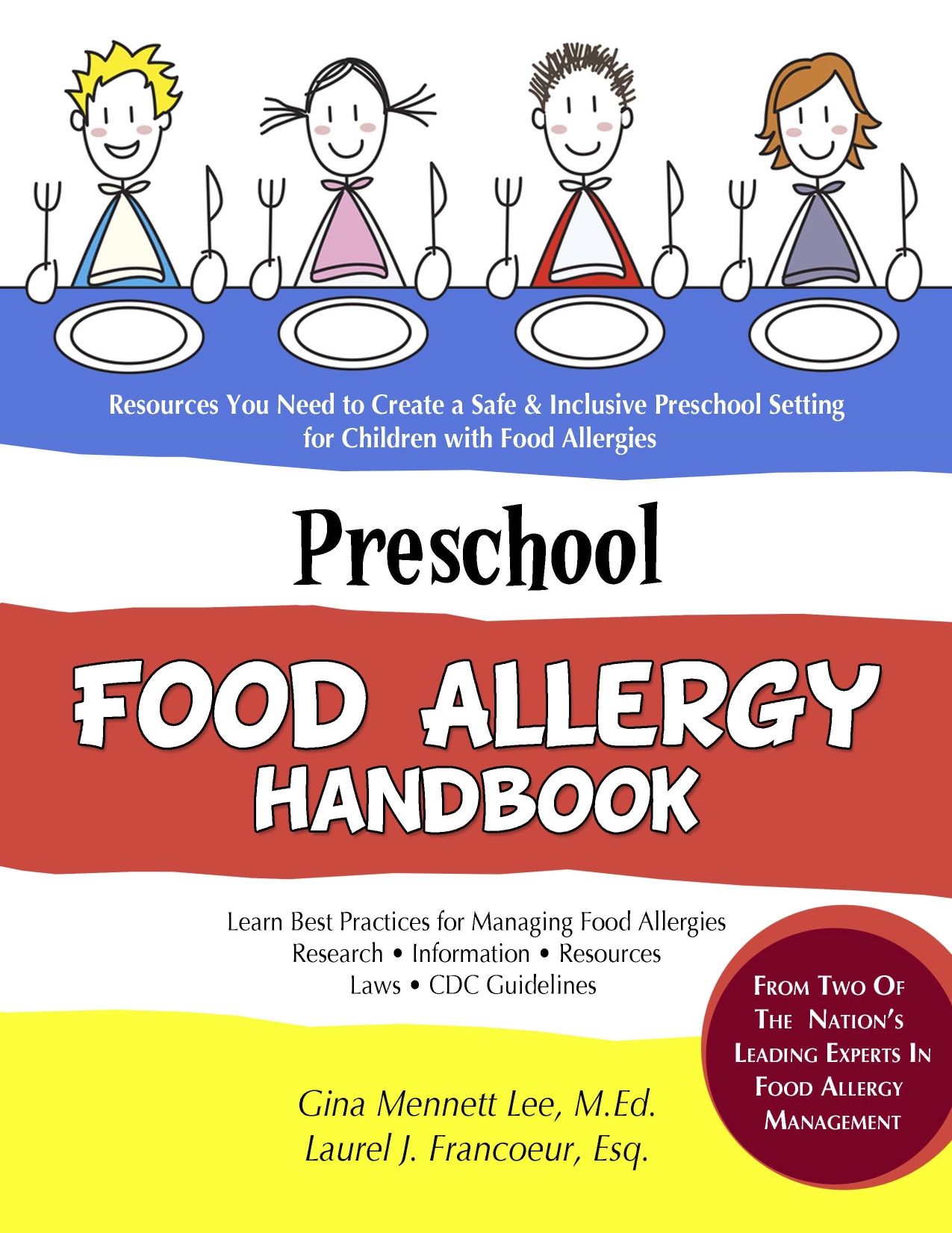
P.S.  I also forgot to mention that I wrote a book with Laurel Franceour that will be available to purchase in later this month.  It is called the “Preschool Food Allergy Handbook”.  I will be offering a special price for those that attended the NJ conference.  Stay tuned….

Allergy Cover


Free Posters:

Screen shot 2014-07-16 at 10.55.42 AM

Symptoms of an Allergic Reaction Poster

Label Reading Poster

FINAL Label Poster 8.5×11

FARE Infographic

Infographic from Food Allergy Research and Education

Be A PAL

Be A P.A.L. Poster from Food Allergy Research and Education


Free Online Awareness Videos for Children without Food Allergies:

Hayden’s Food Allergy Video (YouTube): This provides an excellent, simple explanation of food allergies and how to keep friends with food allergies safe.  It is appropriate for preschool through 4th grade.


Books for Children:

The BugaBees: Friends with Food Allergies

The BugyBops: Friends for All Time

The Princess and the Peanut Allergy by Wendy McClure

The Princess and the Peanut by Sue Ganz-Schmitt

The Peanut Free Café by Gloria Koster

Nutley: the Nut-Free Squirrel by Stephanie Sorkin


Free Handbook for School Employees:

The Food Allergy Book: What School Employees Need to Know (www.neahin.org)


Free Printable Activities for Children:

Be A P.A.L. (foodallergy.org)

No Biggie Bunch (nobiggiebunch.com)


National Guidelines for Developing Policy:

Safe at School and Ready to Learn

Voluntary Guidelines for Managing Food Allergy in Schools and Early Care and Education Programs


FREE Poster: Symptoms of an Allergic Reaction

Monday, July 28th, 2014 | Permalink

By Gina Mennett Lee, M.Ed.

Food Allergy Educator & Consultant

FoodAllergyConsulting.com


Screen shot 2014-07-16 at 10.55.42 AM


One of the most important skills in managing food allergies is the ability to identify an allergic reaction.  Early identification is critical.  I am sharing this FREE poster with you in hopes that you will download it and use it.  The information provided on this resource is consistent with the CDC Guidelines.

I recommend that these be placed in school cafeterias and classrooms as a reminder to school personnel. Parents and other caregivers may also find it useful to post in the home on the fridge or in the kitchen.

DOWNLOAD HERE:

Poster 8.5 X 11

Poster 11X17

Related posts:

FREE Food Allergy Training Options for Schools

Managing Food Allergies in the Classroom: A Free Guide for Classroom Teachers

Best Resources for Managing Food Allergies in the School Setting


Managing Food Allergies in the Classroom: A FREE Guide for Classroom Teachers

Wednesday, April 9th, 2014 | Permalink


By Gina Mennett Lee, M.Ed.

The number of children with food allergies in the United States is now estimated to be 1 in 13.  This means there are approximately 2 children in every classroom with food allergies.   That number is especially alarming given that children with food allergies can be at risk for having a life-threatening reaction called anaphylaxis.  As a classroom teacher, you spend the greatest amount of time with your students, aside from their families.   You are also most likely to be the person who will first need to respond should a reaction occur.   As a matter of fact, in a study of MA epinephrine use in schools, 45% of symptoms developed in the classroom.  See graph below:

Screen shot 2014-04-26 at 1.08.02 PM


Hopefully your school has implemented a plan for the management of children with food allergies that is consistent with the newly released CDC guidelines.  Whether this has occurred or not, there are still many things you can do as a classroom teacher to ensure that children with food allergies can fully and safely participate in your classroom.   (Please note that older students should be active participants in the management of their food allergies.)

Below are some simple, common sense measures you can implement to ensure that children with food allergies are safe and included in your classroom.

1.    Create a positive climate by fostering an understanding about food allergies.   All eyes are on you and people will follow your lead.  This includes children, parents, and other school employees.

  • Students: It is important to note approximately 50% of children with food allergies report being bullied (31.5% of children with food allergies are bullied specifically due to their allergies).  Consider doing a lesson about food allergies with your students.  There are books and videos available for this use.
  • Other Parents: Speak in a positive manner when discussing food allergy management in your classroom.  I overheard a teacher making a negative comment about a new classroom food allergy policy at a parent night.  As a result, other parents began to discuss food allergies in a negative manner.  This fostered an atmosphere of resentment rather than support. Be aware of how powerful your words and actions are to those around you.

2.   Reduce the risk of accidental exposure

  • Recycled food containers: Are there any food containers being used in your classroom?  If so, get rid of them.  Trace amounts of allergens can be found in these containers.  Even if there were a way to be absolutely sure there were no allergens in the container, it is unsettling for a child to have to use a container of a food he/she has been told not to touch.
  • Soaps and Lotions: Do you have soaps or lotions for use in your classroom?  Check the labels for allergens.  Parents of children with food allergies are a good resource and are often happy to help with this.
  • Art & Craft Supplies: Check the labels for each item to ensure they do not contain allergens.  This may require a phone call to the manufacturer as craft labels are often more difficult to read.   FALCPA (food allergy labeling law) does not apply to these products.  Enlist the help of the parent to the food allergic child.  They may have already checked these products or may be willing to help.
  • Other Classroom Supplies: Go through additional classroom supplies including items such as science experiments and games to ensure they are free of allergens.
  • Food storage:  Where are lunches and/or snacks kept?  Can they be kept in an area that is separate from the learning environment?  Children with food allergies may need a special spot to keep their food that is away from the other foods in order to avoid cross-contact (separate cubby or locker).
  • Hand washing:  It is recommended that children wash hands before and after eating.  Both soap and water, and commercial wipes are effective at removing allergens.  (Please note that hand sanitizers do not remove allergens.)
  • Birthdays, Rewards & Classroom Celebrations: It is recommended that you avoid using food as a rewards or for celebrations.  This will significantly reduce the risk of accidental exposure.  There are additional benefits to this as well.  Children will not associate all fun with food.
  • Food in the classroom:  The safest and easiest option is keep classrooms free of food.  This will automatically reduce the risk of accidental exposure and it has no impact on other children.  It also allows you, as the classroom teacher, the ability to focus on learning rather than food allergy management.   Realizing that this may not always be a possibility, I have created a chart of accommodations needed if food is present in the classroom.

ACCOMMODATIONS NEEDED

Screen shot 2014-04-09 at 12.10.12 PM

 If you or your students eat breakfast, snacks, or lunch in the classroom, there will need to be a system in place to monitor the food being eaten to ensure that they do not contain allergens.  The CDC guidelines recommend that no allergens be present in the classroom.   (If the foods the children are eating are being sent in from home and NOT shared, you may be able to provide a list of “safe snacks” for the other parents in the classroom.  It is important to note, however, that labels and manufacturing practices can change at any time.)   The CDC guidelines also recommend that children wash their hands before and after eating and that all eating surfaces be cleaned.

Do not serve food to any child without the parent’s knowledge and consent.  Gone are the days when you could surprise the class with some homemade cookies.  There are too many risks associated with this, and many other food-related health issues affect children beyond food allergies.  Make it a rule not to serve food without parent knowledge and consent.  Even if you “know” the food is safe, please get permission before serving.  For example, a child with a milk allergy can safely eat watermelon.   However, if the sponge the person used to clean the cutting board for the watermelon was also used to wash a cup that contained milk, there now could be milk proteins present in the watermelon due to cross-contact.

 3.    Communicate

  • School Nurse:  If you are fortunate enough to have school nurse available, speak with him/her about food allergies in general and about the specific needs of the children in your class as soon as possible.  The sooner you are able to do this, the more time you will have to prepare your classroom.
  • Past teachers: Talk to the teacher the child had the previous year to discuss strategies that worked well.
  • Parents/Guardians of Child with Food Allergies: Meet the parents/guardians before school starts to discuss their child’s needs.   Make communication a priority when dealing with the parents/guardians of a child with a food allergy. They will be extremely appreciative.  As an added benefit, they can help you.  Caring for a child with food allergies is a big responsibility and one that they fully understand.
  • Other parents/guardians of children in your classroom: It is considered best practice to not have the child’s allergens in the classroom.  Typically, the school nurse, principal or classroom teacher will send a letter home to classroom parents asking that food containing specific allergens not be eaten in the classroom.  If snacks are consumed in the classroom, it can be helpful to create a list of safe snacks to send home to parents as well.  However, please keep in mind that labels and manufacturing practices can change at any time. Some schools have opted to have only fruits and vegetables for snack time.   The parents of children with food allergies may be willing to offer suggestions for a safe snack list.
  • Be sure to respect the child’s privacy.  It is the law. It’s important not to use the child’s name or give details of the child’s medical history without permission from the parent.
  • Substitute teachers : How will you communicate the needs of the child with food allergies to substitutes?  Will it be in your sub folder?  How will you ensure that the sub reads it?  Will there be a specific sub assigned to your classroom that has been trained and is aware of the needs of the children in your class?
  • Special guests: Whenever someone comes into your room, there is a risk that they may bring something unexpected.  For example, a parent volunteer may walk in with a coffee that contains milk, or a guest speaker may bring in a craft supply that contains an allergen.  Do as much planning as you can in advance.  Discuss guests with the parents of the food allergic child, when possible.  They may be able to anticipate potential risks.   (If the child is old enough, you may discuss it with the child directly.)  Be prepared to respond if someone does bring an allergen into the classroom.  Some teachers post signs outside the classroom as a reminder that the classroom is allergen-free.
  • Field trips:  Again, communicate with the child’s parents/guardians in advance of the trip.  Some things you can prepare for and others you cannot.  The child with food allergies should always be with a chaperone who is trained and has immediate access to the child’s medication.  It’s also good idea to travel with wipes and keep them with you at all times.  It can be helpful for unexpected clean-ups and hand washing.  Always offer to allow the child’s parent to attend field trips.

4.    Be prepared to respond should a reaction occur

  • Training: Have you been trained to recognize the symptoms of an allergic reaction?  Do you know how to respond?   Do you understand the child’s Food Allergy Action Plan/Emergency Care Plan?  Do you know who is repsonsible for administering the epinephrine?  If you are responsible, have you been trained and are you comfortable using the epinephrine auto-injector? Do you know who is responsible for calling  911 and what to say?  (If not, discuss creating a 911 script with your school nurse and/or principal and post it near the phone and keep it with emergency communication devices when away from the classroom.)
  • Emergency Communication: Do you have a way to directly contact emergency services at all times during the school day?  (This includes recess and other times you are not in your classroom.)
  • Medication:  Where will medication be kept?  Is the child old enough to self-carry?  If not, will the medication be kept in your classroom?  (One suggestion is to hang a zippered pouch from a hook that is too high for children to reach but easily accessible to adults.)
  • Don’t be afraid to use the epinephrine auto-injector.  It will save the child. It will not hurt them.  If state law/regulations and local policy allow you to administer epinephrine, ask your school nurse if there is an opportunity to try administering an expired epinephrine injector it into a grapefruit.  This will allow you to experience how a real auto-injector feels.  Depending on the type of auto-injector the child is prescribed, it can feel quite different from the trainer.

5.  Be confident.  Once you have implemented these strategies, you should feel confident that you can provide a safe and welcoming environment that will allow all of your students to grow as learners and as people.


I have created a FREE checklist for managing food allergies in the classroom.  Screen shot 2014-04-09 at 1.05.44 PMScreen shot 2014-04-09 at 1.05.52 PM


* * Data taken from The Management of Life Threatening Allergies in School: Lessons Learned from Massashusetts  By Michael Pistiner MD, MMSc and Anne H. Sheetz RN, MPH, NEA-BC.  

Thank you to Julia Verillo, B.A. Elementary Education (3rd grade teacher in CT), and Tina Stewart, M.Ed. (3rd grade teacher in MA) for reviewing this article.

Resources:

Food Allergen Exposure in the School Setting

The Management of Life Threatening Allergies in School: Lessons Learned from Massachusetts, Epinephrine Administration in Schools Brief Summary

Voluntary Guidelines for Managing Food Allergies in Schools and Early Care and Education Programs 


Food in the Classroom is Not About Public Opinion

Sunday, February 23rd, 2014 | Permalink

By Gina Mennett Lee, M.Ed.

The debate about food in classroom has heated up in multiple media outlets this week.  As a food allergy educator and consultant, I’d like to offer my perspective.   In my opinion, this issue is not up for public debate.   At the heart of the it, is the safety of children while in school and their equal access to the educational setting.  The way a school chooses to handle the issues of safety and access is not up to the loudest parents, it up to those that are charged with the task of managing our schools and those that are truly educated about food allergies.


The question school leaders need to be asking is, “How do we ensure that children with food allergies are safe and included while at school?’ 

Creating a safe and inclusive environment requires more than addressing food in the classroom.  Policy must address access to epinephrine, staff training, parent and student education, and much more.  But these measures do not impact the daily routines of other children.  Because reducing or eliminating outside food from the classroom requires a change, it causes conflict.  No one likes change, even when it is necessary.

This decision to change is what Danbury, CT, Superintendent, Sal Pascarella and the Danbury BOE are now grappling with.  After creating a policy that seemed to appease both sides, they were still faced with allergic reactions that required students to be transported to the ER . You can read the full story here.

When a child has an allergic reaction at school, whether it is mild or severe, they are missing out on class time and potentially their right to a Free and Appropriate Public Education.  Accidents happen.  That’s why school personnel need to be prepared to handle them, but when a “celebration” ends up interfering with a child’s education, I consider it a systemic failure.  Food, in the form of rewards, celebrations, and birthday parties, is unnecessary in the school setting.   There are many fun, food-free ways to celebrate that allow all children to safely participate.

Additionally, when managing a serious medical condition such as food allergies, the outcome can be tragic.  It is disrespectful to the memory of the children that have died of allergic reactions in schools, to ignore their stories and maintain the status quo, because of parent complaints about their child’s right to a cupcake.

Having spent a significant amount of time teaching in our public schools, I actually sympathize with what can sometimes be a daunting task, creating and implementing effective policies.   That is why I am committed to helping schools with food allergy management. The influx of children with food allergies has been fairly recent and at times, overwhelming.  Managing food allergies is only one of a multitude of issues and concerns that need to be managed on a daily basis by the leaders in our schools.

But now that 2 children in every classroom has a food allergy we can no longer afford to continue educating our children without addressing food allergy management.  Now is the time for school personnel to make food allergy management a priority.

For many years, schools were forced to deal with the task of managing food allergies with little or no guidance.  This is no longer the case.  The CDC has laid out a specific road map for creating policy and regulations in the school setting through the newly released Voluntary Guidelines for Managing Food Allergies in the Schools and Early Care and Education Programs.

I have spent many hours reviewing these guidelines.  On the subject of food in the classroom, the recommendations are very clear.

They state:

“Avoid the use of identified allergens in class projects, parties, holidays and celebrations, arts, crafts, science experiments, cooking, snacks or rewards.”

“Use nonfood incentives for prizes, gifts, and awards.”


I don’t think there is much to debate here.  Removing unnecessary food is a common-sense measure that:

1. is consistent with the CDC guidelines,

2. will reduce accidental exposures to allergens for those with food allergies, and

3. will result in less work for our classroom teachers (not to mention, less worry for our school nurses, principals, superintendents and school boards).


End of debate.

Mennett Lee, LLC (www.FoodAllergyConsulting.com)

What Should Be Done to Protect Food Allergic Children in the School Setting?

Wednesday, January 29th, 2014 | Permalink

By Gina Mennett Lee, M.Ed.

Many schools and childcare centers are wrestling with this very question.  But the answer could be closer than one might expect.  Rules and expectations are a regular part of the school setting.  We just need to apply them to this specific concern.

Here is an example.

Many schools have programs that allow children to use technology in the classroom.  Recently, I was asked to review and sign a contract of rules the children needed to follow in order to use an ipad.   As I looked at the clearly defined, bulleted list of what was expected of the children in order to have the privilege of using a piece of equipment, it occurred to me how closely some of these resembled accommodations needed for children with food allergies.

IPAD Contract


Below is the content of the contract:

iPad Rules:

  1. Clean Hands-wash and dry hands before you use an iPad
  2. No Liquids-don’t have drinks around the iPad including water
  3. Be Gentle- treat the iPad with respect. Carry it carefully and set it down securely
  4. Follow Instructions-use only the apps that you have been given permission to use.
  5. Ask Questions-if you have a problem with the iPad, speak up and let you teacher know
  6. Sleep it-when the teacher is talking to the class, or you are not using the iPad, put it on the sleep setting

This was a formal written contract that needed to be signed and returned by every family in this classroom.  This was all to keep an $800 electronic device safe from harm.

 So my question is, if we can do all of this for a piece of  $800 equipment, how much more should we be willing to do to protect a child?

Many school districts and childcare centers still do not have written rules, policies or regulations in place to protect children with food allergies.

The CDC has provided guidance in this area by publishing their Voluntary Guidelines for Managing Food Allergies in Schools and Early Care and Education Programs.

AllergyHome provides this table with suggested accommodations, Food Allergen Exposure in the School Setting as well as a wealth of free resources.

FARE provides these tips for the classroom setting.

Kids With Food Allergies Foundation provides school resources here.

FAACT provides this Education Resource Center.


The common thread is that there must be rules put in place in order to protect children with food allergies.  These rules should be clearly written and easy for people to access.  Communication and implementation are key components of a successful plan.

Some common recommendations are to:

  • identify children at risk for an allergic reaction
  • create a plan specific to the needs of each identified child
  • train all adults responsible for children in the identification of an allergic reaction and how to use epinephrine
  • wash hands before and after eating
  • wash tables and chairs in the lunchroom before each lunch wave
  • check for allergens in food, crafts, cleaning supplies, soaps, lotions, and other classroom materials
  • have food-free classrooms or restrict food in the classroom
  • enforce a no food sharing rule
  • provide non-food items for rewards, birthdays, celebrations
  • provide allergen-free zones or seating
  • have rapid access to epinephrine
  • provide safe transportation
  • assess risks ahead of time when planning field trips or special guests in the classroom


What do you think?   For information on how your school or childcare center can implement the CDC guidelines, please contact Mennett Lee, LLC.  at gmleeconsulting@gmail.com.


* Disclosure:  I am a contributor to the AllergyHome website.


BEST Resources for Managing Food Allergies in the School Setting

Monday, December 2nd, 2013 | Permalink

By Gina Mennett Lee, M.Ed.

Food Allergy Educator and Consultant


Screen shot 2013-12-02 at 6.18.42 PM

I have been reading and analyzing everything food allergy related for the past 8 years.  From my perspective of both a food allergy advocate and a former teacher, here are the resource that I have found to be most helpful.  All of these can be found under the “resources” section of my website.


FREE RESOURCES:

FAEN You Could Save a Life…Poster 8 x 11- (Great for Lunchrooms, Classrooms, Teachers’ Rooms)

Potential Allergens in Preschool and School Activities (Table of allergens found in craft and art supplies)

FREE Teaching Tools for Children:

Be A P.A.L. Program (Appropriate for teaching other children about food allergies. Ages PreK-8.)

Everyday Cool with Food Allergies (Appropriate for teaching children about their food allergies.  Ages PreK-2.)

Hayden’s Food Allergy Video (Excellent video to teach other children about food allergies.  Ages PreK-4.)


Suggested Books to Use as Teaching Tools for Children (PreK-3):

The BugaBees: Friends with Food Allergies by Amy Recob

The BugyBops: Friends for All Time by Amy Recob

Everyday Cool with Food Allergies by Dr. Michael Pistiner

The Princess and the Peanut Allergy by Wendy McClure

The Princess and the Peanut by Sue Ganz-Schmitt

The Peanut Free Café by Gloria Koster

Nutley: the Nut-Free Squirrel by Stephanie Sorkin

Alexander the Elephant Series from FARE

Allie the Allergic Elephant, Cody the Allergic Cow and Chad the Allergic Chipmunk


FREE Training Tools for School Employees:

AllergyReady.com (This is a free, interactive training tool for school personnel.  It is very thorough and hits on almost all areas of food allergy management.   Employees can print out proof of completion.  It is created by a team of experts in the field of  food allergies. )

AllergyHome ( This is an excellent website created by two pediatric allergists.  There are many resources, all of them free.  I provided a link to a free training module for school personnel.  It is 30 minutes long and has a test at the end.)

The Food Allergy Book: What School Employees Need to Know  (This is a simple, easy to understand guide from the National Education Association.  It is appropriate for all school personnel.   You can download it for free or order hard copies to distribute.  You only pay for shipping.)


FREE Guides for Developing Policy:

Food Allergen Exposure in the School Setting (This is an excellent table to use when creating school-wide policy and/or when discussing individual accommodations.  It is based on the new CDC guidelines and references the latest facts and research in the food allergy world.)

School Food Allergy Education Table (Age-appropriate food allergy education based on CDC guidelines)

Safe at School and Ready to Learn (From the National School Board Association- the checklist on pages 18-33 is especially helpful.)

Voluntary Guidelines for Managing Food Allergy in Schools and Early Care and Education Programs (From the Centers of Disease Control )


If there are resources you feel I’ve missed, please let me know.

BUY YOUR COPY TODAY!

"One Stop Food Allergy Book Has It All!" -GratefulFoodie

Subscribe to Blog via Email

Keep up-to-date on the latest news, research and resources in the world of food allergies by subscribing to my blog.

Disclaimer

The information provided on this website is not intended to be used as medical or legal advice, nor is it intended to diagnose health problems, to act as a substitute for a doctor, or to act as a substitute for a lawyer. Nothing on this website can replace the independent judgment of a licensed physician or lawyer. If you, or a member of your family, has or is suspected to have a medical condition, please consult your health care provider. This website is provided on an "as is" basis without warranties of any kind, express or implied, including those of title, merchantability, fitness for a particular purpose. The user assumes all responsibility and risk for the use of this website.