Archive for the Food Allergies in the Community Category

#WhereIsYourEPI?

Wednesday, January 21st, 2015 | Permalink

By Gina Mennett Lee, M.Ed.

FoodAllergyConsulting.com

Moving beyond awareness to education:  Each month I will launching an educational campaign to help get important information about managing food allergies out to greater community.  I hope that you will join me!

The educational campaign for February is #WhereIsYourEPI?

The purpose of this campaign is to emphasize the importance of having epinephrine immediately available at all times.

#WhereIsYourEpi


Did you know that a delay in using epinephrine for a life-threatening reaction (anaphylaxis) can have a huge impact on the outcome of the patient and can even result in death? 
What research reveals:
  • The delay or non-use of epinephrine is risk factor for fatal anaphylaxis (more info here)
  • The later you use the epi, the higher likelihood of hospitalization (more info here)
  • In a recent survey, only 40% of those with life-threatening food allergies were carrying their epinephrine
No one plans to have an allergic reaction.
Reactions can happen ANYTIME, ANYWHERE.  That is why it is important that those with food allergies ALWAYS have epinephrine immediately available.

LET’S TURN THIS AROUND!

How can you help?

  1. Post the #WhereIsYourEPI? image (above) to social media.
  2. Ask your loved ones with food allergies this important question and encourage them to always have their epinephrine.
  3. Enter my contest. Let’s set a good example.  Show us how you keep epi immediately available at all times (whether at home, at school or out and about)  by posting a picture to my website or by posting to twitter and you will be entered to win a $50 Amazon Gift Card.*
* All twitter entries must be tagged with #WhereIsYourEPI? and @MennettLeeLLC  to be considered.  All website entries should be posted here.  Not tech savvy?  Send your submission to: gmleeconsulting@gmail.com.  By entering the contest, you allow Mennett Lee, LLC to use your image.  Contest ends February 14, 2015.  Winner will be selected on February 20, 2014.
Related Post:
New Food Allergy Agenda: Moving Beyond Awareness to Education


Advocacy Toolkit

Monday, January 5th, 2015 | Permalink


Screen shot 2015-01-05 at 1.52.47 PMI am so excited to share this excellent resource from the Asthma & Allergy Foundation of America.  This is a topic that is near and dear to my heart as a food allergy consultant.  At the Food Allergy Bloggers Conference last September, I was honored to speak about advocacy with Caroline Moassessi, Laurel Francoeur, and Jan Hansen.  So I was thrilled when I heard that Caroline helped to create this resource for AAFA.  Her knowledge and experience are on full display in this toolkit.  This toolkit includes information on how to effectively communicate your message, the legislative process, using social media for advocacy, and much more.  It is a must read for any advocate.  Download it, read it and share it!


Inclusion Means Everyone: The TEAL PUMPKIN PROJECT

Monday, October 20th, 2014 | Permalink

TEAl Pumpkin 1

Next Friday night as I put our Teal Pumpkin outside on my front steps, I will say a silent prayer of thanks to a mom I have never met, in a state far from my own, who decided to share a simple but wonderful idea.

What was her idea?   Place a teal pumpkin on your doorstep to let trick-or-treaters know that you provide non-food treats.

We did not wish to exclude candy but instead wanted to add another option of a safe alternative to be available,” states Becky Basalone of FACET.

Because of Becky Basalone and the Food Allergy Community of East Tennessee (FACET), the entire food allergy community now has a common gesture to bring us all together.  Thanks to the marketing muscle of Food Allergy Research & Education, the most amazing part of this campaign is that it has reached beyond our tight-knit food allergy community out to the general public.  It has united neighborhoods, schools, and towns in a way no other food allergy movement has.  From the farmer in Tennessee that decided to sell teal pumpkins, to my cousin in Ohio that chose to join in for no other reason but to support children with food allergies, this project has reached far and wide all in the name of inclusion.

We are a stonger community

We want to raise awareness of food allergies and other dietary issues that may restrict/limit certain food products, like candy, due to health risk,” explains Becky.  However, this project has become more than a campaign to raise awareness.  It has made me us all a part of something much larger than ourselves.  By putting out a teal pumpkin, we are sending a very clear message to all children: “WE CARE ABOUT YOU.”  I cannot think of a better message can we send this Halloween.


To join the movement on facebook, click HERE.

For free flyers and posters visit Food Allergy Research and Education.

For a list of non-food rewards from Kids with Food Allergies, click here.


What are food allergies revealing about our society?

Friday, October 17th, 2014 | Permalink

By Gina Mennett Lee, M.Ed.  FoodAllergyConsulting.com

“It takes a village to raise a child. It takes a child with autism to raise the consciousness of the village.” Coach Elaine Hall

This quote was shared by Dr. Rob Melillo via twitter this morning and it immediately struck a cord. It so perfectly captures how I feel about food allergies (as well as autism and other disabilities). These children are here to teach us lessons such as strength, compassion, perseverance, selflessness and unconditional love.  As much as I wish there were no such thing as a food allergy, I am thankful for what this condition has taught me and my family.  But what is this condition telling us about our society?  Have food allergies raised the consciousness of the village?

Have food allergies raised the consciousness of the village?

I believe that we will eventually find a cure for food allergies.  Effective treatments are already on the horizon.  But I am more concerned about the fallout from this chapter in our history.   I have experienced unkind behavior from others in response to my child’s medical condition and I’ve heard many stories too offensive to even repeat. Just take a look at the “comments” section of any mainstream media article about food allergies and you will see firsthand the anger and resentment thrust upon the food allergy community.

“I try to view misunderstandings as an opportunity to educate.”

I believe the majority of these comments are the result of misplaced anger, ignorance and misunderstandings.  I see these responses as an opportunity to educate.  I have to believe that if people really understood the seriousness of food allergies, the social and emotional impact of it, that they would do all they could to support adults and children with this condition.  So, I continue to work, to educate, to advocate.

So, my questions to you are:

What have food allergies revealed about your community?

What has your child taught you?

Food Allergy Bloggers Conference: A True Community Event

Tuesday, October 7th, 2014 | Permalink

"The Power Panel"  Caroline Moassessi, Laurel Francoeur, me, and Jan Hansen

Dubbed “The Power Panel” Caroline Moassessi, Laurel Francoeur, me, and Jan Hansen

I was honored to speak at this year’s Food Allergy Bloggers Conference held at the South Point Hotel in Las Vegas.  Last year was it’s inaugural year and there was so much buzz about it that I entered this year with very high expectations.  Not only would I be able to meet, in person, people I have been working with for several years but I would also be in an environment like no other.  This conference is not associated with a specific non-profit is very much a conference about building our food allergy community and its businesses.  As a result there were food vendors, app creators, website designers, social media experts, bloggers, authors and people like me, (food allergy educators and consultants) all there to talk shop.

I finally got to meet my friend, Caroline Moassessi.

I finally got to meet my friend, Caroline Moassessi.

I started out my weekend by meeting a woman I have grown to love even though we had never actually met, Caroline Moassessi.  Let me say, that I was not disappointed.  She was just as wonderful as I imagined her.  She is the woman behind GratefulFoodie.com.  Her blog keeps us all up-to-date on the latest happenings in the world of asthma and allergies including product reviews and personal musings.

On my way to drop off all our luggage, I hear….”Gina!” from down the long hotel corridor.  Who did I find?  The one and only, Keith Norman, chef and allergy educator.  Again, we’ve never really met but hugs were in order anyway.  He is a warm, kind person and I was thankful to get to know him a little but more.

Breakfast with the ladies and Chef Keith Norman. Front: me, Keith Back: Caroline Moassessi, Cheryl Viirand (Freedible.com), Tricia Gravankar (RockFoodAllergiesConsulting.com), Rebecca Sherrow, and

Breakfast with the ladies and Chef Keith Norman.
Front: me, Keith
Back: Caroline Moassessi, Cheryl Viirand (Freedible.com), Tricia Gravankar (RockFoodAllergiesConsulting.com), Rebecca Sherrow, and Adrienne

The next morning, several of us met for breakfast.  I was happy to finally meet another compadre, Tricia Gravankar.  We have had lots of discussions about our individual passions to help spread the word about food allergy management in way that is fact-based and clear.  She is a true asset to the food allergy community with her background as a nurse and her experience as a parent and a patient.  She launched her own consulting business at FABCon, RockFoodAllergiesConsulting.  Her specialty is anaphylaxis education and management.  I also met the ladies from Freedible.com, a wonderful website designed specifically to engage the food blogging community.

FRIDAY

Friday night was the official beginning of the conference.  Earlier in the day, I registered and received a literal mountain of freebies from the show sponsors.  A special thank you must go out to the sponsors: Sanofi, Enjoy Life, Mylan, Nature’s Path, Allergic Living, Food Allergy & Anaphylaxis Connection Team, Asthma and Allergy Foundation of America, Kids with Food Allergies, Food Allergy Research and Education, Gluten Free and more, SunButter, South Point, AllerBling, AllergyEats, I.M. Healthy SoyNutButter, Luke’s Organic, SoDelicious, Cybele’s, Freedible, Don’t Go Nuts, Anaphylaxis Canada, Pinto Barn, Pascha, YoDish, Orange Geek, Tiger Nuts, SunCups, Zego, Growing Naturals, Rock Food Allergies Consulting, Ian’s, Affinity, No Biggie Bunch, Vine Market, Divvies, Udi’s Gluten Free, Celiac Support Association, Massel, and Content Checked for their generosity.

The Friday night dinner and social were highlighted by the “surprise” awards given to some of my personal heros, Lynda Mitchell (Founder of Kids with Food Allergies), Linda Coss (Author of How to Manage Your Child’s Life-Threatening Food Allergies and two cookbooks), Beth Hillson, and Dr. Paul Erlich.  To top it all off, I was able to meet Robyn O’Brien (food allergy warrior and author of The Unhealthy Truth)

Pictured here: Jenny Sprague, Linda Coss, Lynda Mitchell and Homa Woodrum.

Pictured here: Jenny Sprague (FABlogCon Founder), Linda Coss, Lynda Mitchell and Homa Woodrum (FABlogCon Founder).


SATURDAY

The next day was a blur of activity and workshops by some of the best blogging/food allergy/social media minds around.  My only regret is that I cannot clone myself.  I was only able to attend one session.  It was with blogger/author/editor, Alisa Fleming from godairyfree.com and I was happy to learn some valuable tips from her. I missed a couple of session because I was finally able to catch up with a dear friend, Yael Kozar.  I was honored to be interviewed by her for her enormously popular Food Allergy Podcasts.  I also got to meet the camera man, Yael’s hardworking, very supportive husband!

Podcast interview

Breakfast and lunch times were perfect for catching up with friends old and new.  I was  happy to see Lori Sandler from Divvies, Eleanor Garrow and Carol D’Agnese from FAACT, Kim and Jodie from AllerBling, Heather Mehra from The No Biggie Bunch, David Bloom and his lovely wife, Debra of SnackSafely.com and many others.  Here are few pictures from my personal FABCon album.

FoodAllergyMom Doc

FoodAllergyMomDoc, Donna DeCosta

Me, Allergic Living Editor, Gwen Smith and No Nut Traveler, Lianne Mandlebaum

Me, Allergic Living Editor, Gwen Smith and No Nut Traveler, Lianne Mandlebaum

Loved meeting these fabulous ladies!  Support group leaders and advocates, Connie Green and Kelly Morgan.

Loved meeting these fabulous ladies! Support group leaders and amazing advocates, Connie Green and Kelly Morgan.

Sharon Wong and me

Super Advocate, Sharon Wong

Kyle, me , and Tiffany

Kyle Dine, me, Tiffany Glass and our “friends”.


The final session of Saturday featured Dr. Li and Dr. Gupta presenting one of my favorite topics, Food Allergy Research.  I was impressed by the results of the use of Traditional Chinese Medicine.  Dr. Gupta had a message that was so happy to hear, I had to cheer from the back of the room.  “Epinephrine must be used as a first-line treatment for anaphylaxis.  Not antihistamine.”   She also surprised us all by launching an educational music video featuring her rendition of Gloria Gaynor’s “I Will Survive.”  For more information about the session content, visit my twitter feed for #fablogcon.

Gupta video

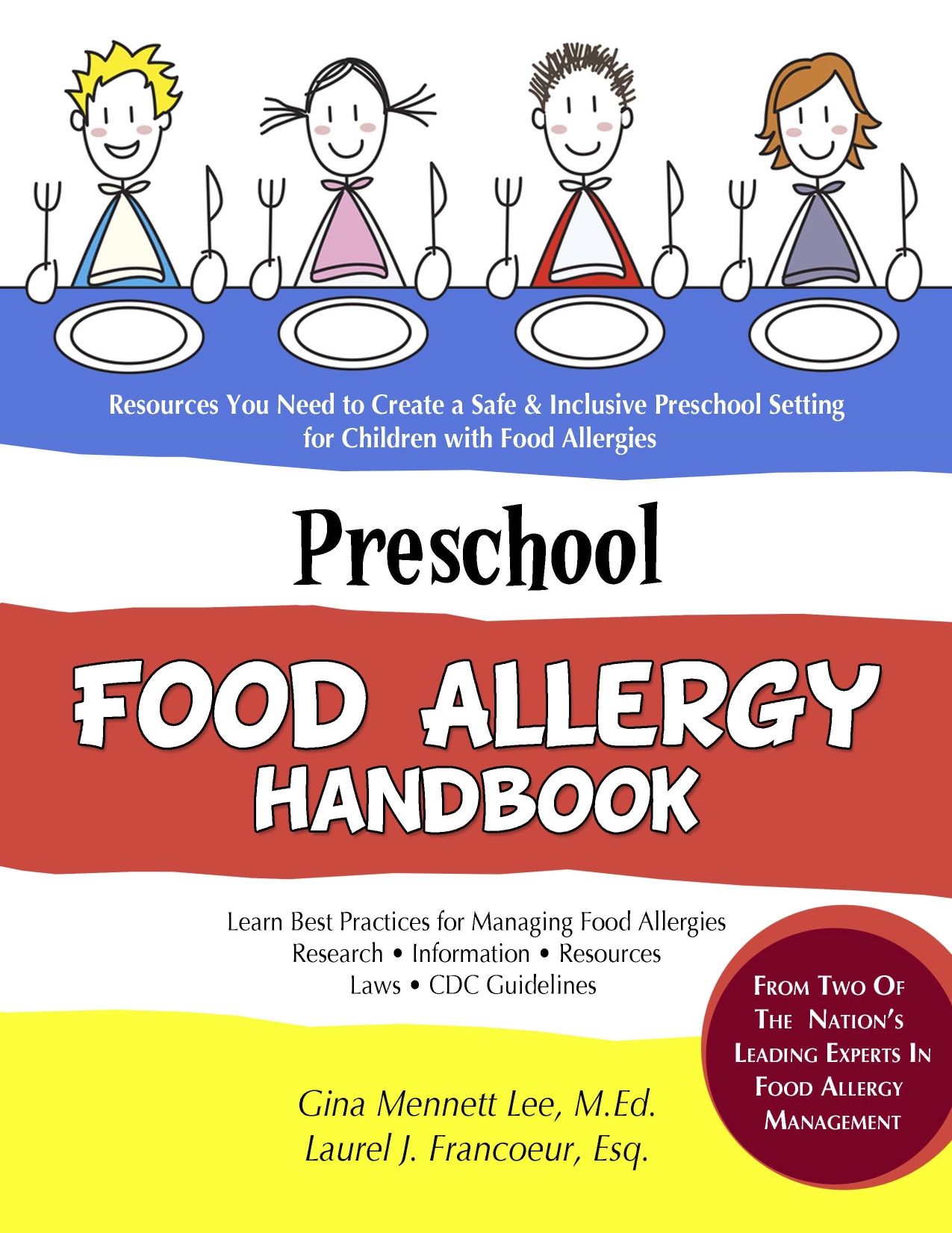
Saturday night, Laurel Francoeur and I launched our new book, the Preschool Food Allergy Handbook (sponsored in part by BugaBees:Friends with Food Allergies and Kyle Dine).  The response to our book was very exciting!  It is our mission to reach this important population with the information and resources they need to have a successful foundation at preschool.

first customers

Our first customers, Summer and Sara, advocates from Nevada and super nice people.

Dr Li buys book

The amazing Dr. Li even stopped by to buy our book!


SATURDAY NIGHT SURPRISE!!  Jerome Bettis came by to speak to the crowd and spend a moment with each of us.

Bettis

SUNDAY

Sunday was show time.  I presented two workshops with colleagues Jan Hanson, Caroline Moassessi and Laurel Francoeur.  The first was “How to Influence Change in School Policy”, and the second was “504 Plans”.

After our presentations, we were ready to relax and have fun!

After our presentations, we were ready to relax and have fun!

The only downside to presenting is missing the other sessions.  There were many fantastic people to meet and learn from that I couldn’t possibly see everyone.  Next year, I’m making it a priority to see more sessions.

Sunday night, I was truly honored to have dinner with some of the most amazing women in the food allergy community.  Even though I was thoroughly exhausted, it was wonderful to look around the table and see the faces of people I admire so  much and to be able to toast to them and all that has been achieved through their efforts.   It was an experience I won’t soon forget.

Pictured here:  Heidi Bayer, Jenny Sprague, Homa Wodrum, and Collette Martin.

Pictured here: Heidi Bayer, Jenny Sprague, Homa Woodrum, Collette Martin and Laurel Francoeur.  Not pictured:  Mary Vargas, Gwen Smith, Lianne Mandlebaum, Caroline Moassessi, Lynda Mitchell, Linda Coss and many more.

I cannot end this post without acknowledging the two women that were responsible for creating not only a conference, but a true experience, Homa Woodrum and Jenny Sprague.  I am extremely grateful for their dedication to bringing our community together for the common good and for their tireless efforts in making the weekend run smoothly.  Thank you, ladies!  I’m already gearing up for next year!

Homa, Jenny and Selena

Homa, Jenny and Selena.


FARE’s New Resource Is Even Better Than You Think!

Friday, September 12th, 2014 | Permalink

By Gina Mennett Lee, M.Ed.

FoodAllergyConsulting.com

ItScreen shot 2014-09-11 at 8.12.31 PM

Yesterday, Food Allergy Research and Education released “Creating a Food Allergy Safety Zone At Home” and I jumped for joy but not for the reasons you would expect.  While I think this is a fantastic resource for the newly diagnosed, I believe it should be used to reach a much wider audience.  This is the perfect tool to use to teach others about how to safely host someone with food allergies.

A few weeks ago, I took an informal poll on facebook.  I asked, “What is the one aspect of food allergy management that you wish others understood?”  By far, the area people wished others knew more about, was the concept of cross-contact.  I find cross-contact to be the one of  the most misunderstood concepts as well.  People think that the only way to have a reaction is to directly ingest the food.  When, in my personal experience, it’s much more difficult to avoid cross-contact.  This is also what poses the greatest risk when people with food allergies eat away from home.

 It’s the nuances of food allergy management that often are the most difficult to communicate.

Recently, a very kind mother offered to have my 9-year-old daughter over her house for dinner.  She assured me that she would only serve safe foods. I was so thankful for her generous offer.  I felt awful having to then engage in an awkward discussion about the fact that it’s not as easy as only serving safe foods.  I told her about all the precautionary measures that would need be in place in order for my daughter to eat safely.  Thankfully, she took it in stride and seemed willing to take on the responsibility (with help from me).  She even went so far as to offer to host a few parents at her house for a “training” on how to safely host my daughter.  I thought, “What a wonderful person!”  Then, “That’s a great idea, but where do I begin!”

This guide is my answer.  Although many of the tips are specific to the home of the food allergic person, there is a wealth of great information that could be used to educate those that wish to host a person with food allergies.

I love the kitchen dos and don’ts and the examples of direct and indirect cross-contact.  This is exactly what I was looking for.  It is straight-forward, easy to understand, and gives specific tips that can be immediately implemented.  I recommend sharing this with family members, friends, coaches, PTA leaders, and school personnel as a way to communicate the precautions that are necessary to keep a child with food allergies safe when preparing or serving food.

Thank you Food Allergy Research and Education and Chef Joel Schaefer for making a valuable and effective resource!  Now to begin preparing that parent training….


Related topics:

FREE POSTER: How to Read A Label for Food Allergens in 3 Easy Steps

Food Allergy Tips for PTA Leaders

How to Read A Label for Food Allergens in 3 Easy Steps

Tuesday, September 2nd, 2014 | Permalink

By Gina Mennett Lee, M.Ed. (FoodAllergyConsulting.com)

One of the most important (and often the most challenging) aspects of food allergy management is learning how to read a label for allergens.   In my role as a consultant, I’m often asked, “How do you read a label?”   I’m excited to finally be able to share with a resource that I hope will help people with this task.  It is my “Label Reading 1-2-3”  poster.

Label Reading Poster

I created a poster that shows you how to read a label the way I personally read a label.  I try to quickly eliminate unsafe foods (Steps 1 & 2), but also take the time to read every ingredient of those foods that might be safe (Step 3).

This poster is available to download for FREE-HERE: Label Reading Poster  Please share!!

For more information on our current labeling laws, be sure to read here.

Camp TAG: An inside look into the camp designed specifically for children with food allergies and their siblings.

Monday, August 25th, 2014 | Permalink

By Gina Mennett Lee, M.Ed.  FoodAllergyConsulting.com

me and eleanor camp tag

Eleanor and I pose for a picture with our own campers.

Last month our family took a little road trip to Williamstown, New Jersey so my daughter could attend Camp TAG.  Because most camps and extra-curricular providers are still not equipped to safely handle children with multiple food allergies there are few choices available once summer rolls around.  We were excited to be able to give my daughter the opportunity to have a real camp experience.

What is CAMP TAG?

 “Camp TAG provides a safe place for children with food allergies and eosinophilic disorders and their siblings to have fun – with no worries about allergic reactions – and meet other children who share similar experiences.”   (FAACT website)

Camp TAG is the brain child of Eleanor Garrow, President & CEO of Food Allergy & Anaphylaxis Connection Team (FAACT). She started it in 2010 when she was Vice President of Education and Outreach at FAAN (now FARE).

How does Camp TAG manage food allergies?

Before even looking at the activities the camp provides, parents of children with food allergies need to know how their child’s allergies will be managed.

I was happy to find that Camp TAG has implemented excellent strategies to prevent (and to be able to swiftly respond to) reactions.  Listed below are some of the simple, yet effective strategies that Camp TAG employs.

  • Handwashing: All Campers wash their hands at the beginning of the camp day and before and after snack and lunch.
  • Snacks:  Snacks are provided by trusted food companies that make products free of the Top 8 allergens. The ingredient lists for these snacks are given to parents ahead of time for review.   Water is provided by the camp.  No other drinks are allowed.
  • Lunch:  All campers bring their own lunches each day.  Lunches need to be free of  peanuts, tree nuts, fish, shellfish.Foods with wheat, egg, milk, and soy are allowed, such as sandwich bread, crackers, and cookies (must be free of peanuts, tree nuts, fish, and shellfish). Milk/cheese-based foods are not allowed, such as cheese of any kind, Cheetos, Cheez-It Crackers, Doritos, yogurt, etc., to minimize the risk of cross-contact. Egg-based condiments are not allowed, such as mayonnaise, dressings, dips, etc., to minimize the risk of cross-contact.
  • Rules:  No food sharing.  No touching each other during snack or lunch.
  • Epinephrine:  Epinephrine is stored in an insulated cooler that is kept with the campers at all times. Campers are with trained staff at all times.  Most camp counselors are one of the following:  a person with a food allergy, a sibling to a child with a food allergy or a parent of a child with a food allergy.
  • Access to Medical Services:  There is a trained nurse on staff at the camp site.


What activities does the Camp offer?

Not only are the campgrounds beautiful and nostalgic, but they offer everything from zip-lining and swimming to Gaga and mini golf.

jousting camp tag

More than JUST a Camp.

As an educator, I love to see additional opportunities for learning.  At Camp TAG, each afternoon, the campers participate in empowering and engaging lessons about food allergies including issues such as handling bullying.

Camp TAG also offers an optional, free parent education session.  This summer the session was about addressing food allergies through the use of 504 plans, IEPS, and Health Care Plans, a subject near and dear to my heart.  The Parent Education Session was presented by food allergy all-star, Amelia Smith Murphree, FAACT General Counsel and Vice President of Civil Rights Advocacy.  I found the session to be thorough and detailed and very helpful to those that attended.

That’s not the WHOLE story

There is more to this experience than fun and learning in a safe, friendly environment.  As I quickly found, Camp TAG has become an extended family to the campers that attend.  The families here keep coming back year after year and their connection is evident from the first day.

Linda and Bailey Camp TAg

Lynda Bridges and daughter Bailey

Lynda Bridges has been with Camp TAG since its first year. She explains, “I come back every year because I believe in what Camp TAG offers our children. I support what Eleanor has created with Camp TAG.   I don’t have to worry about her (my daughter’s) food allergies during camp because she is surrounded by people who “get it.” “

Her daughter, Bailey, has attended all four years and next year will be a teen counselor. “Camp TAG is the best week of the summer.  (The Camp)  has impacted my life in a big way.  A major part of my life is living with life-threatening food allergies, Camp TAG lets me be around others who get it and understand how to keep me safe.  I  love it and it teaches me so much about food allergies.”

How do these campers feel about Eleanor?  Well, I think this picture tells the story.

eleanor hug camp tag

It is apparent to anyone that attends that Eleanor has created something very special.  To quote my husband, “This is the first time our daughter has been just a camper not the kid with food allergies.”

Every camper learns and performs the Camp TAG song (written by food allergy rock star, Kyle Dine).  This verse is my favorite:

“Camp TAG, it’s me,

Camp TAG,  it’s you,

Where no one worries about food.”

Indeed, this may be one of the few places where our children:

– don’t have to worry about food,

-don’t have to explain their allergies,

-don’t need to make apologies or excuses.

It’s a place where they can just be kids.  There is no better gift than that!

For more information on Camp TAG, visit FAACT’s website.  For specific questions, contact Eleanor directly at Eleanor.garrow@foodallergyawareness.org


FREE Poster: Symptoms of an Allergic Reaction

Monday, July 28th, 2014 | Permalink

By Gina Mennett Lee, M.Ed.

Food Allergy Educator & Consultant

FoodAllergyConsulting.com


Screen shot 2014-07-16 at 10.55.42 AM


One of the most important skills in managing food allergies is the ability to identify an allergic reaction.  Early identification is critical.  I am sharing this FREE poster with you in hopes that you will download it and use it.  The information provided on this resource is consistent with the CDC Guidelines.

I recommend that these be placed in school cafeterias and classrooms as a reminder to school personnel. Parents and other caregivers may also find it useful to post in the home on the fridge or in the kitchen.

DOWNLOAD HERE:

Poster 8.5 X 11

Poster 11X17

Related posts:

FREE Food Allergy Training Options for Schools

Managing Food Allergies in the Classroom: A Free Guide for Classroom Teachers

Best Resources for Managing Food Allergies in the School Setting


Food in the Classroom is Not About Public Opinion

Sunday, February 23rd, 2014 | Permalink

By Gina Mennett Lee, M.Ed.

The debate about food in classroom has heated up in multiple media outlets this week.  As a food allergy educator and consultant, I’d like to offer my perspective.   In my opinion, this issue is not up for public debate.   At the heart of the it, is the safety of children while in school and their equal access to the educational setting.  The way a school chooses to handle the issues of safety and access is not up to the loudest parents, it up to those that are charged with the task of managing our schools and those that are truly educated about food allergies.


The question school leaders need to be asking is, “How do we ensure that children with food allergies are safe and included while at school?’ 

Creating a safe and inclusive environment requires more than addressing food in the classroom.  Policy must address access to epinephrine, staff training, parent and student education, and much more.  But these measures do not impact the daily routines of other children.  Because reducing or eliminating outside food from the classroom requires a change, it causes conflict.  No one likes change, even when it is necessary.

This decision to change is what Danbury, CT, Superintendent, Sal Pascarella and the Danbury BOE are now grappling with.  After creating a policy that seemed to appease both sides, they were still faced with allergic reactions that required students to be transported to the ER . You can read the full story here.

When a child has an allergic reaction at school, whether it is mild or severe, they are missing out on class time and potentially their right to a Free and Appropriate Public Education.  Accidents happen.  That’s why school personnel need to be prepared to handle them, but when a “celebration” ends up interfering with a child’s education, I consider it a systemic failure.  Food, in the form of rewards, celebrations, and birthday parties, is unnecessary in the school setting.   There are many fun, food-free ways to celebrate that allow all children to safely participate.

Additionally, when managing a serious medical condition such as food allergies, the outcome can be tragic.  It is disrespectful to the memory of the children that have died of allergic reactions in schools, to ignore their stories and maintain the status quo, because of parent complaints about their child’s right to a cupcake.

Having spent a significant amount of time teaching in our public schools, I actually sympathize with what can sometimes be a daunting task, creating and implementing effective policies.   That is why I am committed to helping schools with food allergy management. The influx of children with food allergies has been fairly recent and at times, overwhelming.  Managing food allergies is only one of a multitude of issues and concerns that need to be managed on a daily basis by the leaders in our schools.

But now that 2 children in every classroom has a food allergy we can no longer afford to continue educating our children without addressing food allergy management.  Now is the time for school personnel to make food allergy management a priority.

For many years, schools were forced to deal with the task of managing food allergies with little or no guidance.  This is no longer the case.  The CDC has laid out a specific road map for creating policy and regulations in the school setting through the newly released Voluntary Guidelines for Managing Food Allergies in the Schools and Early Care and Education Programs.

I have spent many hours reviewing these guidelines.  On the subject of food in the classroom, the recommendations are very clear.

They state:

“Avoid the use of identified allergens in class projects, parties, holidays and celebrations, arts, crafts, science experiments, cooking, snacks or rewards.”

“Use nonfood incentives for prizes, gifts, and awards.”


I don’t think there is much to debate here.  Removing unnecessary food is a common-sense measure that:

1. is consistent with the CDC guidelines,

2. will reduce accidental exposures to allergens for those with food allergies, and

3. will result in less work for our classroom teachers (not to mention, less worry for our school nurses, principals, superintendents and school boards).


End of debate.

Mennett Lee, LLC (www.FoodAllergyConsulting.com)

BUY YOUR COPY TODAY!

"One Stop Food Allergy Book Has It All!" -GratefulFoodie

Subscribe to Blog via Email

Keep up-to-date on the latest news, research and resources in the world of food allergies by subscribing to my blog.

Disclaimer

The information provided on this website is not intended to be used as medical or legal advice, nor is it intended to diagnose health problems, to act as a substitute for a doctor, or to act as a substitute for a lawyer. Nothing on this website can replace the independent judgment of a licensed physician or lawyer. If you, or a member of your family, has or is suspected to have a medical condition, please consult your health care provider. This website is provided on an "as is" basis without warranties of any kind, express or implied, including those of title, merchantability, fitness for a particular purpose. The user assumes all responsibility and risk for the use of this website.