Posts Tagged food allergy

Is Device Design To Blame for Incorrect Epi Adminstration?

Tuesday, April 21st, 2015 | Permalink


This past February I was honored to be a speaker at a training session for support group leaders in London.   I learned  a great deal about the commonalities as well as the differences in the ways we approach food allergy management.  While in the UK, I met some amazing “mums” as well as wonderful professionals working in the field of food allergy.  One such professional was Dr. Robert Boyle, a well-known and highly respected pediatric allergist.  Of course, I took the opportunity to pick his brain about some of the concerns we see here in the Untied States.  One such discussion was the effective use of epinephrine auto-injectors by patients.  He let me in on some exciting research he was a part of regarding this very subject.   He shared the results with me but I was unable to share them with you until his paper was published.  Well, the paper has been published and I think the results could impact the choice of auto-injectors prescribed by doctors as well as the future design of epinephrine auto-injectors.

THE STUDY

In this study, patients were trained to use a specific device (Epipen or Anapen).  All patients were able to successfully use the device after initial training.

THEN

They tested the patients’ ability to use the device under simulated anaphylaxis at 6 weeks and at one-year.

NEXT

They switched the devices and did NOT give training with the new device.  (This is a real life scenario that we see here in the USA when insurance companies fail to cover a specific device.)

The purpose of the study was to find if device design (rather than just training) impacted the patients ability to correctly use the auto-injectors.

THE RESULTS

“we have shown… that successful adrenaline administration rates using Anapen and EpiPen are low during simulated anaphylaxis, and EpiPen use under stressful conditions carries a significant risk of digital injection.”
Success rates at the 6-week and one-year intervals were similar, hovering just below 45% for both devices used (Anapen and Epipen).  Meaning that less than half of the participants were able to correctly use the devices at both the 6 week and one year mark, even given successful initial training.
The low success rate is consistent with another study done in the United States that indicated that patients need more training.  However, in this study, the authors conclude that training may not be the only factor but rather device design may be greatly impacting the patients’ ability to correctly use the auto-injectors.
Here is the most significant piece of information for me:
“Over 90% of participants were able to successfully administer adrenaline using Auvi-Q without receiving device-specific training…”
IMG_2214
The success rate for Auvi-Q was an astounding 90%  WITHOUT training!   Success rates for other devices without device-specific training were only  49%.   Hopefully, it goes without saying, that training is very important, but this study has me pondering the role of device design as well.

Of course, this is but one study and I would love to see additional studies.  However, I believe this information is important to share and has an impact on many of the discussions we are having here in the United States regarding use of stock epinephrine in restaurants, schools and other locations.  Could Auvi-Q be a better option in these circumstances?


The authors believe this is worth discussing.

“the high rate of successful adrenaline administration which we found when participants used the audio-prompt device Auvi-Q, in a stressful anaphylaxis scenario and without prior device-specific training, suggests that Auvi-Q is an important advance in AAI device design and may even be suitable for bystander use in public areas such as schools”


Also of interest, were the ways in which people incorrectly used the epinephrine auto-injectors.  The authors hope this information will help aid in device design.

The most common reasons for failing to use the auto-injector correctly were:

  • Failure to remove safety cap
  • Using wrong end of device
  • Not holding device in place long enough

I encourage you to read this study for yourself.

Does this information change the way you manage food allergies?  Please comment below.


A special thank you to Dr. Robert Boyle for sharing this important study.

References:
Patients’ ability to treat anaphylaxis using adrenaline autoinjectors: a randomized controlled trial.
Umasunthar T, Procktor A, Hodes M, Smith JG, Gore C, Cox HE, Marrs T, Hanna H, Phillips K , Pinto C, Turner PJ, Warner JO, Boyle RJ.
Allergy 2015; DOI: 10.1111/all.12628.
Misuse of medical devices: a persistent problem in self-management of asthma and allergic disease
Bonds, Rana S. et al.
Annals of Allergy, Asthma & Immunology , Volume 114 , Issue 1 , 74 – 76.e2

Related Posts:

Do You Know Your Epi?

FARE Announces College Pilot Program

Thursday, April 9th, 2015 | Permalink

Screen shot 2015-04-09 at 11.40.17 AMImage of College of the Holy Cross, a participant in the FARE pilot program.  (Image from news.holycross.edu)

Choosing the right college is an exciting and sometimes difficult prospect for any young adult.  For those managing food allergies, it can especially challenging.  Finding a college prepared and willing to accommodate food allergies can be just as important as the school’s educational offerings.  That’s why I was thrilled to see FARE’s publication of the “Pilot Guidelines for Managing Food Allergies in Higher Education” as well as the announcement of a pilot program to implement these guidelines.

Twelve schools across the country have agreed to participate.   This impressive list of higher education institutions are to be commended for being leaders in this movement to provide safe and accessible educational environments for those with food allergies.

  • College of the Holy Cross (Worcester, Mass.)
  • George Mason University (Fairfax, Va.)
  • King’s College (Wilkes-Barre, Pa.)
  • North Carolina State University
  • Texas A&M University
  • University of Arizona
  • University of Chicago
  • University of Michigan
  • University of Northern Colorado
  • University of Southern California
  • Valparaiso University (Valparaiso, Ind.)
  • Wesleyan University (Middletown, Conn.)

I look forward to hearing more about this program and I am very excited for the additional options that will be open to young adults entering college in the years to come.  Thank you FARE for your commitment to the food allergy community.

Do You Know Your EPI?

Sunday, March 1st, 2015 | Permalink

By Gina Mennett Lee, M.Ed.   FoodAllergyConsulting.com

As part of our Beyond Awareness Food Allergy Educational Campaign for 2015, this month we are focusing on knowing how to use your epinephrine auto-injector.  This month’s campaign is hosted by friend and fellow food allergy advocate, Sharon Wong of NutFreeWok.  Her blog post is an excellent read and thoroughly explains our campaign.  Below I’ve provided my thoughts and a quick overview.

Screen shot 2015-03-01 at 4.09.18 PM

Why focus on epinephrine training?

A recent study from the University of Texas Medical Branch at Galveston found that out of 102 patients ONLY 16% used their epinephrine auto-injector correctly.

Screen shot 2015-03-01 at 5.22.48 PM


The most frightening statement was made by Rana Bonds, MD, ACAAI Fellow and lead author of the study.

“Most patients made multiple mistakes and would not have benefited from self-administration of the potentially life-saving treatment if the need arose.”

What can you do?

  • Be sure that you know how to use the epinephrine prescribed to you or your loved one.
  • Use an epi trainer regularly to make sure you remember.  (Experts recommend at least every 3 months.)
  • Ask your loved one with food allergies where they keep their epi and if they know how to use it.

Please help us to spread this important message by tweeting, sharing or blogging about this topic. Please tag it with #FAEC15 and feel free to share a link to your blog post here.

Links to instructional videos can be found below:

EpiPen
Auvi-Q
Adrenaclick
Epinephrine Autoinject

The “Beyond Awareness Educational Campaign” was created by Gina Mennett Lee, M.Ed. of Mennett Lee, LLC.  The purpose of the campaign is to harness social media to provide necessary education to the public regarding food allergy management.  Caroline Moassessi  of GratefulFoodie and Sharon Wong of Nut Free Wok have joined the campaign to provide an even greater reach.  We hope you will join our effort by sharing the campaigns on your social media outlets. Together we can make a difference.

LEAP Study is “Belle of the Ball” at AAAAI Conference

Friday, February 27th, 2015 | Permalink

By Gina Mennett Lee, M.Ed.

FoodAllergyConsulting.com


“What are you doing?”  My husband asked incredulously.   My eyes had been glued to my phone intermittently for hours over the weekend.
“Following the AAAAI Conference.”

“What is that?”

“The American Academy of Asthma Allergy and Immunology Annual Conference.  I follow it every year to stay up to speed in the latest research.  Docs from the conference are tweeting the most recent research and findings.”

As I snuggled into my home, fire blazing in our fireplace, snow falling outside for the umpteenth time this winter, some of the allergy field’s greatest medical minds were gathered to share information, debate current thoughts, and hob-knob.

Twitter is the closest I can be to a fly on the wall at the conference.  It allows me access to the thoughts and notes of some of these doctors (some that I have pleasure of knowing) as they are listening to the speakers share their research and findings.  Even better, it gives me a chance to ask questions.

I read, “favorite” and retweet furiously so I can refer back later and track down the research to read.  Of course, I am partial to information related food allergies and anything relating to the school setting.  I was also interested to see lots of discussion on more effective ways to treat asthma patients.   I loved reading the tweets about the debate over whether or not OIT (Oral Immunotherapy) is ready for “primetime”.  (Seems like the consensus was “not quite yet”.)

But, by far, the belle of the ball this year was the LEAP study.

The Learning Early About Peanut Study debuted as this year’s conference and the food allergy world was literally abuzz.  Unfortunately, as this landmark study was released, so were a slew of misrepresentations on the actual implications of the study.  Many people wrongly were proclaiming a cure and recommending people expose children with peanut allergies to peanuts.

Unfortunately, this study does NOT apply to the 15 million patients in the USA that already have food allergy.

It is, however, very promising as it indicates a potential to PREVENT peanut allergy in high risk infants. Further studies are being done to see if it applies to other allergens and what the long-term outcomes are for the patients in the study.

Below is a short video describing the thought behind the creation of this study.

Screen shot 2015-02-27 at 12.06.12 PM


For more information on the LEAP study, I invite you to read it as well as this excellent synopsis of it by Dr. David Stukus on the AsthmaAllergiesChildren.com website.

To see more of what I found interesting, you can read my twitter feed.  Below are just a few examples.

Disclaimer:  Tweets are but a snippet of the information.    It is very important to find and read the research that interests you rather than relying on a tweet (or even a news article) to fully convey the information.


Screen shot 2015-02-22 at 7.32.44 PMScreen shot 2015-02-22 at 7.35.31 PM Screen shot 2015-02-22 at 7.42.06 PMScreen shot 2015-02-27 at 12.13.00 PMScreen shot 2015-02-27 at 12.35.41 PM

I am very thankful to all the doctors and other professionals that took the time to tweet at the AAAAI Conference as well as the dedicated research teams and patients involved in these studies.  I hope all this excitement inspires you read some of the research and to follow along with me next year.


#WhereIsYourEPI?

Wednesday, January 21st, 2015 | Permalink

By Gina Mennett Lee, M.Ed.

FoodAllergyConsulting.com

Moving beyond awareness to education:  Each month I will launching an educational campaign to help get important information about managing food allergies out to greater community.  I hope that you will join me!

The educational campaign for February is #WhereIsYourEPI?

The purpose of this campaign is to emphasize the importance of having epinephrine immediately available at all times.

#WhereIsYourEpi


Did you know that a delay in using epinephrine for a life-threatening reaction (anaphylaxis) can have a huge impact on the outcome of the patient and can even result in death? 
What research reveals:
  • The delay or non-use of epinephrine is risk factor for fatal anaphylaxis (more info here)
  • The later you use the epi, the higher likelihood of hospitalization (more info here)
  • In a recent survey, only 40% of those with life-threatening food allergies were carrying their epinephrine
No one plans to have an allergic reaction.
Reactions can happen ANYTIME, ANYWHERE.  That is why it is important that those with food allergies ALWAYS have epinephrine immediately available.

LET’S TURN THIS AROUND!

How can you help?

  1. Post the #WhereIsYourEPI? image (above) to social media.
  2. Ask your loved ones with food allergies this important question and encourage them to always have their epinephrine.
  3. Enter my contest. Let’s set a good example.  Show us how you keep epi immediately available at all times (whether at home, at school or out and about)  by posting a picture to my website or by posting to twitter and you will be entered to win a $50 Amazon Gift Card.*
* All twitter entries must be tagged with #WhereIsYourEPI? and @MennettLeeLLC  to be considered.  All website entries should be posted here.  Not tech savvy?  Send your submission to: gmleeconsulting@gmail.com.  By entering the contest, you allow Mennett Lee, LLC to use your image.  Contest ends February 14, 2015.  Winner will be selected on February 20, 2014.
Related Post:
New Food Allergy Agenda: Moving Beyond Awareness to Education


Do PTA/PTO Events Need to Be Accessible Under Section 504?

Monday, January 12th, 2015 | Permalink

FoodAllergyConsulting.com

There is much confusion about whether or not PTA/PTO’s are legally obligated to make events accessible for students with food allergies  (Please, keep in mind that the term “accessible” is going to be different for each child. ).  I’ve asked Laurel Francoeur, Esq. to answer this question  for us.  This information only applies to schools that receive federal funding.   We will be addressing these concerns and more in our new book, “The Essential School Food Allergy Handbook” (available Fall 2015).

The content below is written by Laurel J. Francoeur, Esq:

Many wonder whether a school must make Section 504 accommodations at PTO* meetings or events. Section 504 requires schools to make accommodations for children with disabilities throughout the school day, including PTO events that happen during normal school hours.  However, when it comes to after school PTO events, it is not a slam dunk question. For a District to accommodate disabilities like food allergies under Section 504 during PTO meetings and after-school activities, the District must provide “significant assistance” to the PTO.


The District is considered to be providing “significant assistance” when the answer to one or more of the following questions is “yes”:

1) Does the District provide free or reduced cost to the PTO to use District facilities?

2) Does the District publically announce PTO events to the student body or parents?

3) Does the District disseminate flyers or other written communications about PTO events?

4) Does the District allow the PTO to identify itself with the school and use the school logo or name in or associated with its meetings and events?

This is the test currently used by the Office for Civil Rights.  However, it may or may not be used by a federal court.  This test is based on the regulations accompanying Section 504* and a case decided by the OCR  called Irvine Unified Sch. District 19 IDELR 883 (OCR Apr 28, 1993).

OCR can also look to state guidelines about food allergies for assistance. For example, Pennsylvania has voluntary food allergy state guidelines that recommend schools accommodate students at PTO functions.  Although the guidelines are not binding, they encourage PTO activities to be inclusive.  Sometimes OCR uses these state guidelines to shape its decision.

Even if a school does not meet the test for Section 504 above, it may still have to accommodate children with disabilities under the Americans with Disabilities Act.  This is a separate analysis and will be discussed in a later blog post.

*PTO refers to any parent-teacher organization.


Related links:

Food Allergy Tips for PTA Leaders  Written by Gina Mennett Lee, M.Ed and Michael Pistiner, MD, MMSc

For more legal information, visit the  Allergy Law Project.

Do you find this information helpful?  Laurel and I will be addressing this and more in our new book, “The Essential School Food Allergy Handbook.”  (Available Fall 2015)


Advocacy Toolkit

Monday, January 5th, 2015 | Permalink


Screen shot 2015-01-05 at 1.52.47 PMI am so excited to share this excellent resource from the Asthma & Allergy Foundation of America.  This is a topic that is near and dear to my heart as a food allergy consultant.  At the Food Allergy Bloggers Conference last September, I was honored to speak about advocacy with Caroline Moassessi, Laurel Francoeur, and Jan Hansen.  So I was thrilled when I heard that Caroline helped to create this resource for AAFA.  Her knowledge and experience are on full display in this toolkit.  This toolkit includes information on how to effectively communicate your message, the legislative process, using social media for advocacy, and much more.  It is a must read for any advocate.  Download it, read it and share it!


A Food Allergy Mission for 2015: Moving Beyond Awareness to Education

Thursday, January 1st, 2015 | Permalink

Screen shot 2014-12-31 at 8.10.02 PM

As 2014 comes to a close, it is a natural time for reflection.  In addition to making resolutions in my personal life, I have been thinking about our food allergy community and all that has happened this year.   There were high highs like Sean Parker donating $24 million to the cause, and the new and exciting research regarding food allergy therapies.   But there were also some very low lows.  The ignorance on display in Clawson immediately comes to mind.   The lows that tend to impact me most are the stories of food allergy deaths and the many calls and emails I receive from parents worried about exclusion and safety issues at school.  Most of these lows seem to have one common denominator: education.

When I first entered the world of food allergies, about a decade ago, there was little awareness of food allergies.  People had “heard” of peanut allergies but not much else.  It was important to bring awareness to the facts that: one, people can be allergic to any food;  and two, food allergies can be life-threatening.  But in the years since, I’ve seen a much greater need to move beyond awareness and to focus more of our efforts on effective and meaningful education.  Misinformation can be more dangerous than no information at all, and this is especially true for food allergy.

Misinformation can be more dangerous than no information at all, and this is especially true for food allergy.

So in the spirit of making resolutions for the New Year, I hope we can all resolve to work together to make EDUCATION the mission for 2015.

Here are What I View as the Top 5 Educational Priorities:

  1. The importance of food allergic individuals having epinephrine immediately available at all times
  2. How and when to use epinephrine
    • Effective epinephrine auto-injector training,
    • Emphasis on epinephrine as the first-line treatment for anaphylaxis
    • How to identify symptoms of anaphylaxis
  3. How to effectively implement the CDC Guidelines in every school, preschool, and daycare
  4. How food allergies impact individuals, families and communities
  5. How to include those with food allergies in their community


Additional Educational Priorities:

  • Food allergy testing and what it really means
  • How to effectively advocate for your child
  • How to effectively educate those around you
  • The concept of cross-contact (what it is and how to avoid it)
  • Methods of exposure to allergens
  • Labeling laws and their limitations

 In the coming months, I will do my best to advance the goal of education.  If all of us, in the food allergy community (doctors, nurses, non-profits, support group leaders, food allergy educators/consultants/coaches, parents, etc…) could focus on education with consistent messaging from vetted sources, I know we could make a true and lasting impact.  

Will you join me?  What do you see as a priority for 2015?  Is there anything you add to this list?


Top 3 Non-Negotiables for Food Allergy Accommodation Plans

Monday, December 8th, 2014 | Permalink

By Gina Mennett Lee, M.Ed.

FoodAllergyConsulting.com

Hopefully, if you have been reading my work, you know that I stress the importance of an individual written plan for each child with a food allergy.  The importance of an individual plan is echoed in the CDC guidelines.   These plans should address strategies to prevent a reaction as well as what to do should a reaction  occur.  Individual accommodations will differ depending on the child’s allergies and the unique educational setting of the school.  However, there are a few accommodations that I personally hold firm as non-negotiables.  These three accommodations will inform the remainder of the necessary accommodations for each child.

hand stop


1. Immediate access to epinephrine: Every allergist I have spoken to or listened to at conferences (and this includes many of top allergists in the United States) stresses the importance of always having epinephrine with the child.  Why should this NOT be the case at school?  When reviewing research and individual cases of food allergy deaths, delay in administration of epinephrine is often one of the most important factors.  Recently, additional research was published drawing a connection between the delay of the use of epinephrine and the increased amount of time a person was hospitalized.  The message is clear, the sooner the epinephrine is administered, the better the outcome.  Make sure every child has immediate access to this life-saving medication.

2. Supervision by trained staff:  This should be a no-brainer.  If the those supervising the child throughout the school day are not trained to identify the signs of an allergic reaction or trained to administer the epinephrine, there will be a delay in treatment or possibly no treatment at all.  This can have dire consequences.  In some states, there are laws that prohibit certain people from administering epinephrine. If this is the case, alternative plans need to be put in place to ensure each child has immediate access to someone that can administer epinephrine.  All staff can be trained to identify symptoms of an allergic reaction and to prevent reactions from occurring.  This supervision must be in place at all times including on the bus or at before and after school activities.

3. Allergen-free classrooms:  This measure is firmly supported by the CDC.  Children attend school to learn. All children deserve to learn in a safe environment.  For children with food allergies this means an environment free of their allergens.  They should not be put in a situation where they are distracted from their primary goal by having to worry about their allergens.  In addition, I  want teachers to be able to focus on teaching rather than the management and proper clean-up of allergens.  Given that 45% of allergic reactions requiring epinephrine begin in the classroom, reducing the amount of “unnecessary food” as well as eliminating allergens is a safe and effective way to reduce the likelihood of a reaction.

Other points to consider:

Allergens can remain on surfaces that appear to be clean.

Research indicates that adults touch their faces numerous times per hour and that children ages 2-5 touch their faces 40 times per hour.  This means that a student with an allergy can unknowlingly touch their allergen and then touch their eyes, nose or mouth and suffer a reaction as a result.

Often these measures are put in place at a young age.  However, teens and young adults should be given the opportunity to learn in an environment free of their allergens as well.  Teens are at a higher risk of a fatal allergic reaction.  We need to continue to protect these children.


These three accommodations are a solid starting point of an effective plan.

Related posts:

Top 3 Actions Every Preschool Must Take to Protect Students with Food Allergies

FREE Food Allergy Training Options for Schools

Food in the Classroom Not About Public Opinion


CYBER MONDAY SPECIAL

Monday, December 1st, 2014 | Permalink

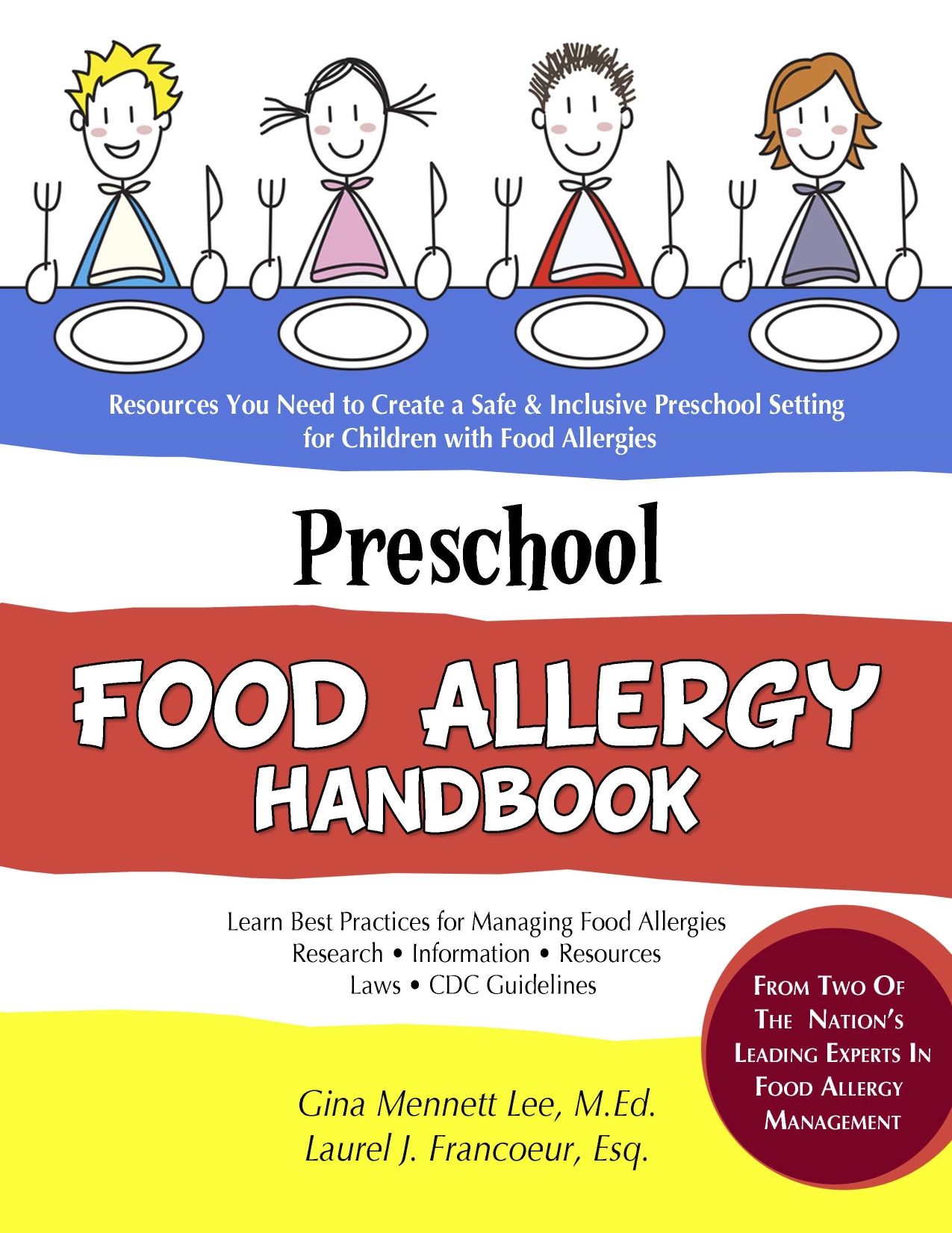
The Preschool Food Allergy Handbook plus FREE Poster!

ONLY $25 and only at LaurelLeeAcademy.com

Allergy Cover


BUY YOUR COPY TODAY!

"One Stop Food Allergy Book Has It All!" -GratefulFoodie

Subscribe to Blog via Email

Keep up-to-date on the latest news, research and resources in the world of food allergies by subscribing to my blog.

Disclaimer

The information provided on this website is not intended to be used as medical or legal advice, nor is it intended to diagnose health problems, to act as a substitute for a doctor, or to act as a substitute for a lawyer. Nothing on this website can replace the independent judgment of a licensed physician or lawyer. If you, or a member of your family, has or is suspected to have a medical condition, please consult your health care provider. This website is provided on an "as is" basis without warranties of any kind, express or implied, including those of title, merchantability, fitness for a particular purpose. The user assumes all responsibility and risk for the use of this website.