Posts Tagged consulting

Do You Know Your EPI?

Sunday, March 1st, 2015 | Permalink

By Gina Mennett Lee, M.Ed.   FoodAllergyConsulting.com

As part of our Beyond Awareness Food Allergy Educational Campaign for 2015, this month we are focusing on knowing how to use your epinephrine auto-injector.  This month’s campaign is hosted by friend and fellow food allergy advocate, Sharon Wong of NutFreeWok.  Her blog post is an excellent read and thoroughly explains our campaign.  Below I’ve provided my thoughts and a quick overview.

Screen shot 2015-03-01 at 4.09.18 PM

Why focus on epinephrine training?

A recent study from the University of Texas Medical Branch at Galveston found that out of 102 patients ONLY 16% used their epinephrine auto-injector correctly.

Screen shot 2015-03-01 at 5.22.48 PM


The most frightening statement was made by Rana Bonds, MD, ACAAI Fellow and lead author of the study.

“Most patients made multiple mistakes and would not have benefited from self-administration of the potentially life-saving treatment if the need arose.”

What can you do?

  • Be sure that you know how to use the epinephrine prescribed to you or your loved one.
  • Use an epi trainer regularly to make sure you remember.  (Experts recommend at least every 3 months.)
  • Ask your loved one with food allergies where they keep their epi and if they know how to use it.

Please help us to spread this important message by tweeting, sharing or blogging about this topic. Please tag it with #FAEC15 and feel free to share a link to your blog post here.

Links to instructional videos can be found below:

EpiPen
Auvi-Q
Adrenaclick
Epinephrine Autoinject

The “Beyond Awareness Educational Campaign” was created by Gina Mennett Lee, M.Ed. of Mennett Lee, LLC.  The purpose of the campaign is to harness social media to provide necessary education to the public regarding food allergy management.  Caroline Moassessi  of GratefulFoodie and Sharon Wong of Nut Free Wok have joined the campaign to provide an even greater reach.  We hope you will join our effort by sharing the campaigns on your social media outlets. Together we can make a difference.

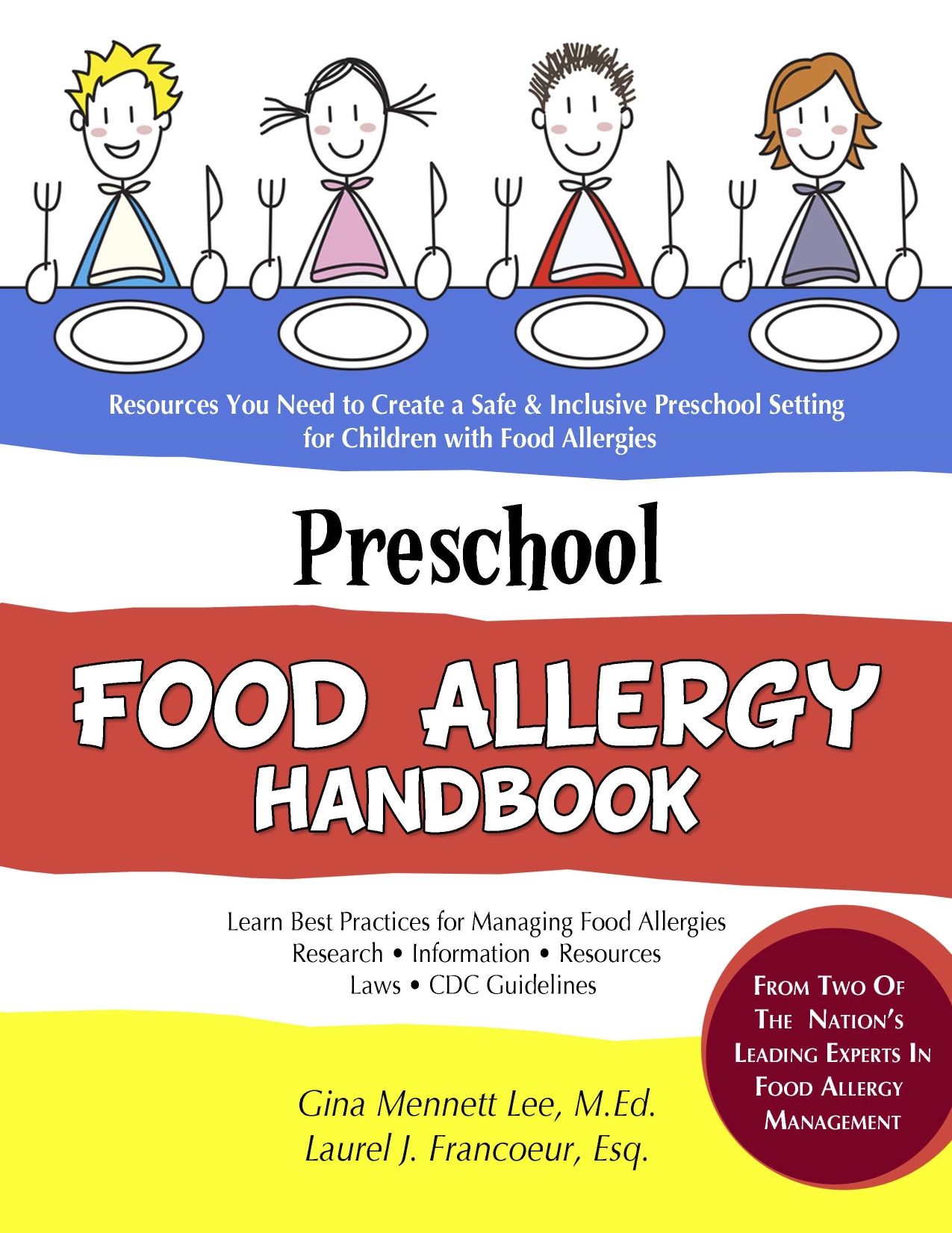
Preschool Food Allergy Handbook: Book Release & Sneak Peek

Wednesday, October 22nd, 2014 | Permalink

Allergy Cover


Book release and sneak peek!!

Laurel Francoeur and I put the finishing touches on our new book, the Preschool Food Allergy Handbook, this September. We launched it at the Food Allergy Bloggers Conference and were overwhelmed by the support of this much needed book addressing the preschool setting.

For those of you that aren’t able to meet us in person at one of our book signings, we wanted to give you a little sneak peek.

Screen shot 2014-10-22 at 6.18.46 PMScreen shot 2014-10-22 at 6.17.30 PM


There are so many wonderful resources we created just for this book that cannot be found anywhere else.

  • How Will Your School Prepare for Food Allergy Emergencies?  Important Questions to Answer
  • Overview of Labeling Laws
  • How to Create a Healthy & Safe Educational Environment
  • How to Prevent Cross-Contact
  • Food Allergy Management and Prevention Plan Worksheet
  • Parent Checklist
  • Questions to Ask When Looking for a Preschool


We also included the best resources currently available.

  • How a Child Might Describe a Reaction
  • Label Reading 1-2-3
  • Tips for Avoiding Your Allergen
  • Free Staff Training Options
  • List of Free Educational Resources for Children
  • Children’s Book List
  • Books for Parents List
  • and much, much more….

To order yours, visit Amazon.com.  A special thank you to  The Bugabees: Friends With Food Allergies

and Kyle Dine for sponsoring our book!


Camp TAG: An inside look into the camp designed specifically for children with food allergies and their siblings.

Monday, August 25th, 2014 | Permalink

By Gina Mennett Lee, M.Ed.  FoodAllergyConsulting.com

me and eleanor camp tag

Eleanor and I pose for a picture with our own campers.

Last month our family took a little road trip to Williamstown, New Jersey so my daughter could attend Camp TAG.  Because most camps and extra-curricular providers are still not equipped to safely handle children with multiple food allergies there are few choices available once summer rolls around.  We were excited to be able to give my daughter the opportunity to have a real camp experience.

What is CAMP TAG?

 “Camp TAG provides a safe place for children with food allergies and eosinophilic disorders and their siblings to have fun – with no worries about allergic reactions – and meet other children who share similar experiences.”   (FAACT website)

Camp TAG is the brain child of Eleanor Garrow, President & CEO of Food Allergy & Anaphylaxis Connection Team (FAACT). She started it in 2010 when she was Vice President of Education and Outreach at FAAN (now FARE).

How does Camp TAG manage food allergies?

Before even looking at the activities the camp provides, parents of children with food allergies need to know how their child’s allergies will be managed.

I was happy to find that Camp TAG has implemented excellent strategies to prevent (and to be able to swiftly respond to) reactions.  Listed below are some of the simple, yet effective strategies that Camp TAG employs.

  • Handwashing: All Campers wash their hands at the beginning of the camp day and before and after snack and lunch.
  • Snacks:  Snacks are provided by trusted food companies that make products free of the Top 8 allergens. The ingredient lists for these snacks are given to parents ahead of time for review.   Water is provided by the camp.  No other drinks are allowed.
  • Lunch:  All campers bring their own lunches each day.  Lunches need to be free of  peanuts, tree nuts, fish, shellfish.Foods with wheat, egg, milk, and soy are allowed, such as sandwich bread, crackers, and cookies (must be free of peanuts, tree nuts, fish, and shellfish). Milk/cheese-based foods are not allowed, such as cheese of any kind, Cheetos, Cheez-It Crackers, Doritos, yogurt, etc., to minimize the risk of cross-contact. Egg-based condiments are not allowed, such as mayonnaise, dressings, dips, etc., to minimize the risk of cross-contact.
  • Rules:  No food sharing.  No touching each other during snack or lunch.
  • Epinephrine:  Epinephrine is stored in an insulated cooler that is kept with the campers at all times. Campers are with trained staff at all times.  Most camp counselors are one of the following:  a person with a food allergy, a sibling to a child with a food allergy or a parent of a child with a food allergy.
  • Access to Medical Services:  There is a trained nurse on staff at the camp site.


What activities does the Camp offer?

Not only are the campgrounds beautiful and nostalgic, but they offer everything from zip-lining and swimming to Gaga and mini golf.

jousting camp tag

More than JUST a Camp.

As an educator, I love to see additional opportunities for learning.  At Camp TAG, each afternoon, the campers participate in empowering and engaging lessons about food allergies including issues such as handling bullying.

Camp TAG also offers an optional, free parent education session.  This summer the session was about addressing food allergies through the use of 504 plans, IEPS, and Health Care Plans, a subject near and dear to my heart.  The Parent Education Session was presented by food allergy all-star, Amelia Smith Murphree, FAACT General Counsel and Vice President of Civil Rights Advocacy.  I found the session to be thorough and detailed and very helpful to those that attended.

That’s not the WHOLE story

There is more to this experience than fun and learning in a safe, friendly environment.  As I quickly found, Camp TAG has become an extended family to the campers that attend.  The families here keep coming back year after year and their connection is evident from the first day.

Linda and Bailey Camp TAg

Lynda Bridges and daughter Bailey

Lynda Bridges has been with Camp TAG since its first year. She explains, “I come back every year because I believe in what Camp TAG offers our children. I support what Eleanor has created with Camp TAG.   I don’t have to worry about her (my daughter’s) food allergies during camp because she is surrounded by people who “get it.” “

Her daughter, Bailey, has attended all four years and next year will be a teen counselor. “Camp TAG is the best week of the summer.  (The Camp)  has impacted my life in a big way.  A major part of my life is living with life-threatening food allergies, Camp TAG lets me be around others who get it and understand how to keep me safe.  I  love it and it teaches me so much about food allergies.”

How do these campers feel about Eleanor?  Well, I think this picture tells the story.

eleanor hug camp tag

It is apparent to anyone that attends that Eleanor has created something very special.  To quote my husband, “This is the first time our daughter has been just a camper not the kid with food allergies.”

Every camper learns and performs the Camp TAG song (written by food allergy rock star, Kyle Dine).  This verse is my favorite:

“Camp TAG, it’s me,

Camp TAG,  it’s you,

Where no one worries about food.”

Indeed, this may be one of the few places where our children:

– don’t have to worry about food,

-don’t have to explain their allergies,

-don’t need to make apologies or excuses.

It’s a place where they can just be kids.  There is no better gift than that!

For more information on Camp TAG, visit FAACT’s website.  For specific questions, contact Eleanor directly at Eleanor.garrow@foodallergyawareness.org


FREE Poster: Symptoms of an Allergic Reaction

Monday, July 28th, 2014 | Permalink

By Gina Mennett Lee, M.Ed.

Food Allergy Educator & Consultant

FoodAllergyConsulting.com


Screen shot 2014-07-16 at 10.55.42 AM


One of the most important skills in managing food allergies is the ability to identify an allergic reaction.  Early identification is critical.  I am sharing this FREE poster with you in hopes that you will download it and use it.  The information provided on this resource is consistent with the CDC Guidelines.

I recommend that these be placed in school cafeterias and classrooms as a reminder to school personnel. Parents and other caregivers may also find it useful to post in the home on the fridge or in the kitchen.

DOWNLOAD HERE:

Poster 8.5 X 11

Poster 11X17

Related posts:

FREE Food Allergy Training Options for Schools

Managing Food Allergies in the Classroom: A Free Guide for Classroom Teachers

Best Resources for Managing Food Allergies in the School Setting


The Launch of LaurelLee Academy Workshops

Monday, March 10th, 2014 | Permalink

I am excited to announce the launch of LaurelLee Academy – a joint venture between Greenlaurel Solutions, LLC and Mennett Lee, LLC. Our companies are working together to combine our years of expertise in the legal and scholastic worlds to offer intensive hands-on food allergy workshops.

Our first workshop, 504 Plans & Food Allergies, is scheduled for April 12 in Lexington, MA. It is intended for parents who want an in-depth understanding of the laws and protections for their food allergic children.  Those that attend will learn to create and use tools for themselves, saving parents hundreds of dollars in outside legal or advocacy fees. Each parent will leave the workshop with a solid understanding of 504 plans and applicable laws and a sample customized care plan that they can use to negotiate at school, as well as other valuable resources. There will be plenty of time for Q&A so parents can get personal attention for their specific issues.
Register at www.laurelleeacademy.com to get a discount – space is limited.

What Should Be Done to Protect Food Allergic Children in the School Setting?

Wednesday, January 29th, 2014 | Permalink

By Gina Mennett Lee, M.Ed.

Many schools and childcare centers are wrestling with this very question.  But the answer could be closer than one might expect.  Rules and expectations are a regular part of the school setting.  We just need to apply them to this specific concern.

Here is an example.

Many schools have programs that allow children to use technology in the classroom.  Recently, I was asked to review and sign a contract of rules the children needed to follow in order to use an ipad.   As I looked at the clearly defined, bulleted list of what was expected of the children in order to have the privilege of using a piece of equipment, it occurred to me how closely some of these resembled accommodations needed for children with food allergies.

IPAD Contract


Below is the content of the contract:

iPad Rules:

  1. Clean Hands-wash and dry hands before you use an iPad
  2. No Liquids-don’t have drinks around the iPad including water
  3. Be Gentle- treat the iPad with respect. Carry it carefully and set it down securely
  4. Follow Instructions-use only the apps that you have been given permission to use.
  5. Ask Questions-if you have a problem with the iPad, speak up and let you teacher know
  6. Sleep it-when the teacher is talking to the class, or you are not using the iPad, put it on the sleep setting

This was a formal written contract that needed to be signed and returned by every family in this classroom.  This was all to keep an $800 electronic device safe from harm.

 So my question is, if we can do all of this for a piece of  $800 equipment, how much more should we be willing to do to protect a child?

Many school districts and childcare centers still do not have written rules, policies or regulations in place to protect children with food allergies.

The CDC has provided guidance in this area by publishing their Voluntary Guidelines for Managing Food Allergies in Schools and Early Care and Education Programs.

AllergyHome provides this table with suggested accommodations, Food Allergen Exposure in the School Setting as well as a wealth of free resources.

FARE provides these tips for the classroom setting.

Kids With Food Allergies Foundation provides school resources here.

FAACT provides this Education Resource Center.


The common thread is that there must be rules put in place in order to protect children with food allergies.  These rules should be clearly written and easy for people to access.  Communication and implementation are key components of a successful plan.

Some common recommendations are to:

  • identify children at risk for an allergic reaction
  • create a plan specific to the needs of each identified child
  • train all adults responsible for children in the identification of an allergic reaction and how to use epinephrine
  • wash hands before and after eating
  • wash tables and chairs in the lunchroom before each lunch wave
  • check for allergens in food, crafts, cleaning supplies, soaps, lotions, and other classroom materials
  • have food-free classrooms or restrict food in the classroom
  • enforce a no food sharing rule
  • provide non-food items for rewards, birthdays, celebrations
  • provide allergen-free zones or seating
  • have rapid access to epinephrine
  • provide safe transportation
  • assess risks ahead of time when planning field trips or special guests in the classroom


What do you think?   For information on how your school or childcare center can implement the CDC guidelines, please contact Mennett Lee, LLC.  at gmleeconsulting@gmail.com.


* Disclosure:  I am a contributor to the AllergyHome website.


BUY YOUR COPY TODAY!

"One Stop Food Allergy Book Has It All!" -GratefulFoodie

Subscribe to Blog via Email

Keep up-to-date on the latest news, research and resources in the world of food allergies by subscribing to my blog.

Disclaimer

The information provided on this website is not intended to be used as medical or legal advice, nor is it intended to diagnose health problems, to act as a substitute for a doctor, or to act as a substitute for a lawyer. Nothing on this website can replace the independent judgment of a licensed physician or lawyer. If you, or a member of your family, has or is suspected to have a medical condition, please consult your health care provider. This website is provided on an "as is" basis without warranties of any kind, express or implied, including those of title, merchantability, fitness for a particular purpose. The user assumes all responsibility and risk for the use of this website.