Archive for the 504 plans Category

Top 3 Non-Negotiables for Food Allergy Accommodation Plans

Monday, December 8th, 2014 | Permalink

By Gina Mennett Lee, M.Ed.

FoodAllergyConsulting.com

Hopefully, if you have been reading my work, you know that I stress the importance of an individual written plan for each child with a food allergy.  The importance of an individual plan is echoed in the CDC guidelines.   These plans should address strategies to prevent a reaction as well as what to do should a reaction  occur.  Individual accommodations will differ depending on the child’s allergies and the unique educational setting of the school.  However, there are a few accommodations that I personally hold firm as non-negotiables.  These three accommodations will inform the remainder of the necessary accommodations for each child.

hand stop


1. Immediate access to epinephrine: Every allergist I have spoken to or listened to at conferences (and this includes many of top allergists in the United States) stresses the importance of always having epinephrine with the child.  Why should this NOT be the case at school?  When reviewing research and individual cases of food allergy deaths, delay in administration of epinephrine is often one of the most important factors.  Recently, additional research was published drawing a connection between the delay of the use of epinephrine and the increased amount of time a person was hospitalized.  The message is clear, the sooner the epinephrine is administered, the better the outcome.  Make sure every child has immediate access to this life-saving medication.

2. Supervision by trained staff:  This should be a no-brainer.  If the those supervising the child throughout the school day are not trained to identify the signs of an allergic reaction or trained to administer the epinephrine, there will be a delay in treatment or possibly no treatment at all.  This can have dire consequences.  In some states, there are laws that prohibit certain people from administering epinephrine. If this is the case, alternative plans need to be put in place to ensure each child has immediate access to someone that can administer epinephrine.  All staff can be trained to identify symptoms of an allergic reaction and to prevent reactions from occurring.  This supervision must be in place at all times including on the bus or at before and after school activities.

3. Allergen-free classrooms:  This measure is firmly supported by the CDC.  Children attend school to learn. All children deserve to learn in a safe environment.  For children with food allergies this means an environment free of their allergens.  They should not be put in a situation where they are distracted from their primary goal by having to worry about their allergens.  In addition, I  want teachers to be able to focus on teaching rather than the management and proper clean-up of allergens.  Given that 45% of allergic reactions requiring epinephrine begin in the classroom, reducing the amount of “unnecessary food” as well as eliminating allergens is a safe and effective way to reduce the likelihood of a reaction.

Other points to consider:

Allergens can remain on surfaces that appear to be clean.

Research indicates that adults touch their faces numerous times per hour and that children ages 2-5 touch their faces 40 times per hour.  This means that a student with an allergy can unknowlingly touch their allergen and then touch their eyes, nose or mouth and suffer a reaction as a result.

Often these measures are put in place at a young age.  However, teens and young adults should be given the opportunity to learn in an environment free of their allergens as well.  Teens are at a higher risk of a fatal allergic reaction.  We need to continue to protect these children.


These three accommodations are a solid starting point of an effective plan.

Related posts:

Top 3 Actions Every Preschool Must Take to Protect Students with Food Allergies

FREE Food Allergy Training Options for Schools

Food in the Classroom Not About Public Opinion


Food Allergy Bloggers Conference: A True Community Event

Tuesday, October 7th, 2014 | Permalink

"The Power Panel"  Caroline Moassessi, Laurel Francoeur, me, and Jan Hansen

Dubbed “The Power Panel” Caroline Moassessi, Laurel Francoeur, me, and Jan Hansen

I was honored to speak at this year’s Food Allergy Bloggers Conference held at the South Point Hotel in Las Vegas.  Last year was it’s inaugural year and there was so much buzz about it that I entered this year with very high expectations.  Not only would I be able to meet, in person, people I have been working with for several years but I would also be in an environment like no other.  This conference is not associated with a specific non-profit is very much a conference about building our food allergy community and its businesses.  As a result there were food vendors, app creators, website designers, social media experts, bloggers, authors and people like me, (food allergy educators and consultants) all there to talk shop.

I finally got to meet my friend, Caroline Moassessi.

I finally got to meet my friend, Caroline Moassessi.

I started out my weekend by meeting a woman I have grown to love even though we had never actually met, Caroline Moassessi.  Let me say, that I was not disappointed.  She was just as wonderful as I imagined her.  She is the woman behind GratefulFoodie.com.  Her blog keeps us all up-to-date on the latest happenings in the world of asthma and allergies including product reviews and personal musings.

On my way to drop off all our luggage, I hear….”Gina!” from down the long hotel corridor.  Who did I find?  The one and only, Keith Norman, chef and allergy educator.  Again, we’ve never really met but hugs were in order anyway.  He is a warm, kind person and I was thankful to get to know him a little but more.

Breakfast with the ladies and Chef Keith Norman. Front: me, Keith Back: Caroline Moassessi, Cheryl Viirand (Freedible.com), Tricia Gravankar (RockFoodAllergiesConsulting.com), Rebecca Sherrow, and

Breakfast with the ladies and Chef Keith Norman.
Front: me, Keith
Back: Caroline Moassessi, Cheryl Viirand (Freedible.com), Tricia Gravankar (RockFoodAllergiesConsulting.com), Rebecca Sherrow, and Adrienne

The next morning, several of us met for breakfast.  I was happy to finally meet another compadre, Tricia Gravankar.  We have had lots of discussions about our individual passions to help spread the word about food allergy management in way that is fact-based and clear.  She is a true asset to the food allergy community with her background as a nurse and her experience as a parent and a patient.  She launched her own consulting business at FABCon, RockFoodAllergiesConsulting.  Her specialty is anaphylaxis education and management.  I also met the ladies from Freedible.com, a wonderful website designed specifically to engage the food blogging community.

FRIDAY

Friday night was the official beginning of the conference.  Earlier in the day, I registered and received a literal mountain of freebies from the show sponsors.  A special thank you must go out to the sponsors: Sanofi, Enjoy Life, Mylan, Nature’s Path, Allergic Living, Food Allergy & Anaphylaxis Connection Team, Asthma and Allergy Foundation of America, Kids with Food Allergies, Food Allergy Research and Education, Gluten Free and more, SunButter, South Point, AllerBling, AllergyEats, I.M. Healthy SoyNutButter, Luke’s Organic, SoDelicious, Cybele’s, Freedible, Don’t Go Nuts, Anaphylaxis Canada, Pinto Barn, Pascha, YoDish, Orange Geek, Tiger Nuts, SunCups, Zego, Growing Naturals, Rock Food Allergies Consulting, Ian’s, Affinity, No Biggie Bunch, Vine Market, Divvies, Udi’s Gluten Free, Celiac Support Association, Massel, and Content Checked for their generosity.

The Friday night dinner and social were highlighted by the “surprise” awards given to some of my personal heros, Lynda Mitchell (Founder of Kids with Food Allergies), Linda Coss (Author of How to Manage Your Child’s Life-Threatening Food Allergies and two cookbooks), Beth Hillson, and Dr. Paul Erlich.  To top it all off, I was able to meet Robyn O’Brien (food allergy warrior and author of The Unhealthy Truth)

Pictured here: Jenny Sprague, Linda Coss, Lynda Mitchell and Homa Woodrum.

Pictured here: Jenny Sprague (FABlogCon Founder), Linda Coss, Lynda Mitchell and Homa Woodrum (FABlogCon Founder).


SATURDAY

The next day was a blur of activity and workshops by some of the best blogging/food allergy/social media minds around.  My only regret is that I cannot clone myself.  I was only able to attend one session.  It was with blogger/author/editor, Alisa Fleming from godairyfree.com and I was happy to learn some valuable tips from her. I missed a couple of session because I was finally able to catch up with a dear friend, Yael Kozar.  I was honored to be interviewed by her for her enormously popular Food Allergy Podcasts.  I also got to meet the camera man, Yael’s hardworking, very supportive husband!

Podcast interview

Breakfast and lunch times were perfect for catching up with friends old and new.  I was  happy to see Lori Sandler from Divvies, Eleanor Garrow and Carol D’Agnese from FAACT, Kim and Jodie from AllerBling, Heather Mehra from The No Biggie Bunch, David Bloom and his lovely wife, Debra of SnackSafely.com and many others.  Here are few pictures from my personal FABCon album.

FoodAllergyMom Doc

FoodAllergyMomDoc, Donna DeCosta

Me, Allergic Living Editor, Gwen Smith and No Nut Traveler, Lianne Mandlebaum

Me, Allergic Living Editor, Gwen Smith and No Nut Traveler, Lianne Mandlebaum

Loved meeting these fabulous ladies!  Support group leaders and advocates, Connie Green and Kelly Morgan.

Loved meeting these fabulous ladies! Support group leaders and amazing advocates, Connie Green and Kelly Morgan.

Sharon Wong and me

Super Advocate, Sharon Wong

Kyle, me , and Tiffany

Kyle Dine, me, Tiffany Glass and our “friends”.


The final session of Saturday featured Dr. Li and Dr. Gupta presenting one of my favorite topics, Food Allergy Research.  I was impressed by the results of the use of Traditional Chinese Medicine.  Dr. Gupta had a message that was so happy to hear, I had to cheer from the back of the room.  “Epinephrine must be used as a first-line treatment for anaphylaxis.  Not antihistamine.”   She also surprised us all by launching an educational music video featuring her rendition of Gloria Gaynor’s “I Will Survive.”  For more information about the session content, visit my twitter feed for #fablogcon.

Gupta video

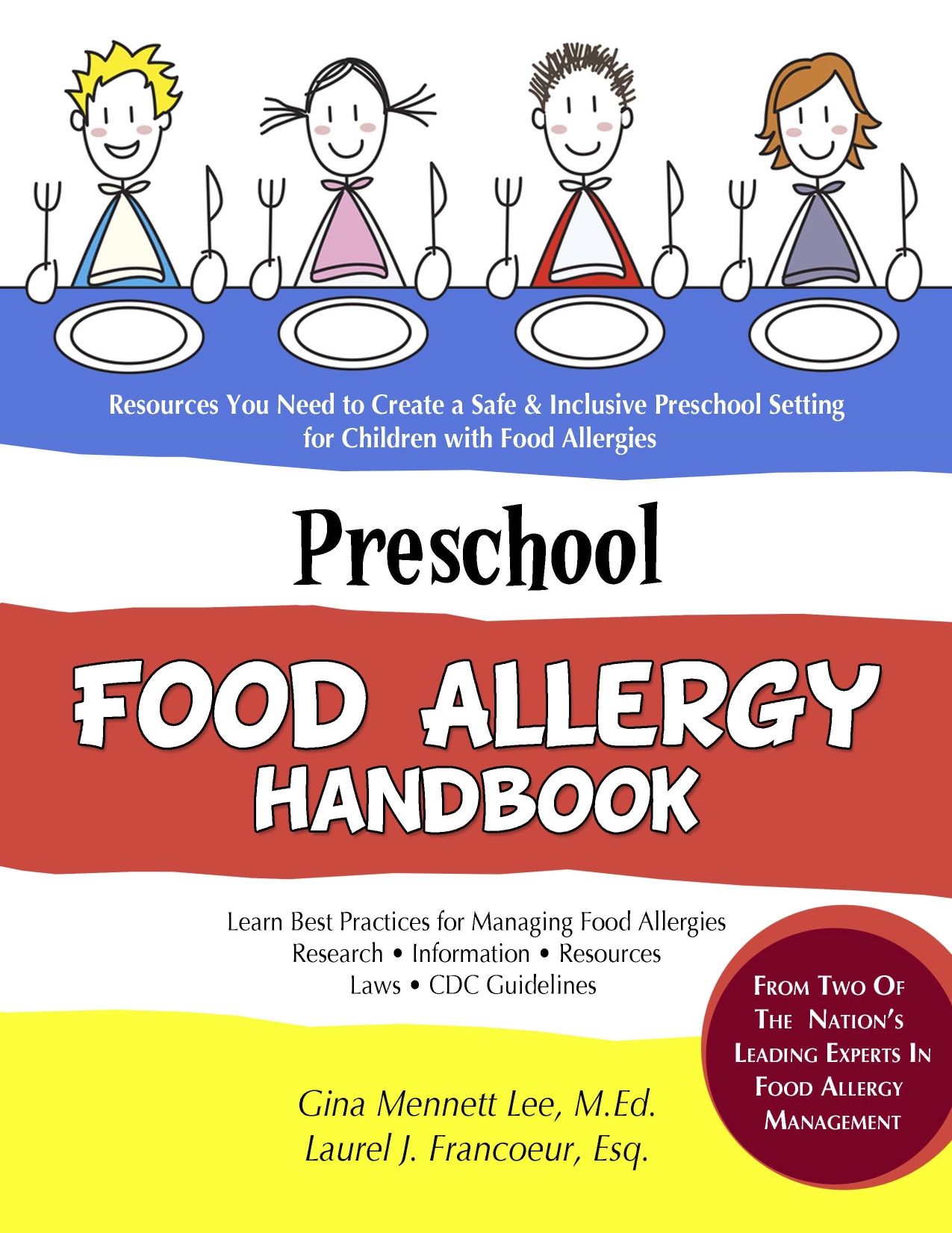
Saturday night, Laurel Francoeur and I launched our new book, the Preschool Food Allergy Handbook (sponsored in part by BugaBees:Friends with Food Allergies and Kyle Dine).  The response to our book was very exciting!  It is our mission to reach this important population with the information and resources they need to have a successful foundation at preschool.

first customers

Our first customers, Summer and Sara, advocates from Nevada and super nice people.

Dr Li buys book

The amazing Dr. Li even stopped by to buy our book!


SATURDAY NIGHT SURPRISE!!  Jerome Bettis came by to speak to the crowd and spend a moment with each of us.

Bettis

SUNDAY

Sunday was show time.  I presented two workshops with colleagues Jan Hanson, Caroline Moassessi and Laurel Francoeur.  The first was “How to Influence Change in School Policy”, and the second was “504 Plans”.

After our presentations, we were ready to relax and have fun!

After our presentations, we were ready to relax and have fun!

The only downside to presenting is missing the other sessions.  There were many fantastic people to meet and learn from that I couldn’t possibly see everyone.  Next year, I’m making it a priority to see more sessions.

Sunday night, I was truly honored to have dinner with some of the most amazing women in the food allergy community.  Even though I was thoroughly exhausted, it was wonderful to look around the table and see the faces of people I admire so  much and to be able to toast to them and all that has been achieved through their efforts.   It was an experience I won’t soon forget.

Pictured here:  Heidi Bayer, Jenny Sprague, Homa Wodrum, and Collette Martin.

Pictured here: Heidi Bayer, Jenny Sprague, Homa Woodrum, Collette Martin and Laurel Francoeur.  Not pictured:  Mary Vargas, Gwen Smith, Lianne Mandlebaum, Caroline Moassessi, Lynda Mitchell, Linda Coss and many more.

I cannot end this post without acknowledging the two women that were responsible for creating not only a conference, but a true experience, Homa Woodrum and Jenny Sprague.  I am extremely grateful for their dedication to bringing our community together for the common good and for their tireless efforts in making the weekend run smoothly.  Thank you, ladies!  I’m already gearing up for next year!

Homa, Jenny and Selena

Homa, Jenny and Selena.


What Should Be Done to Protect Food Allergic Children in the School Setting?

Wednesday, January 29th, 2014 | Permalink

By Gina Mennett Lee, M.Ed.

Many schools and childcare centers are wrestling with this very question.  But the answer could be closer than one might expect.  Rules and expectations are a regular part of the school setting.  We just need to apply them to this specific concern.

Here is an example.

Many schools have programs that allow children to use technology in the classroom.  Recently, I was asked to review and sign a contract of rules the children needed to follow in order to use an ipad.   As I looked at the clearly defined, bulleted list of what was expected of the children in order to have the privilege of using a piece of equipment, it occurred to me how closely some of these resembled accommodations needed for children with food allergies.

IPAD Contract


Below is the content of the contract:

iPad Rules:

  1. Clean Hands-wash and dry hands before you use an iPad
  2. No Liquids-don’t have drinks around the iPad including water
  3. Be Gentle- treat the iPad with respect. Carry it carefully and set it down securely
  4. Follow Instructions-use only the apps that you have been given permission to use.
  5. Ask Questions-if you have a problem with the iPad, speak up and let you teacher know
  6. Sleep it-when the teacher is talking to the class, or you are not using the iPad, put it on the sleep setting

This was a formal written contract that needed to be signed and returned by every family in this classroom.  This was all to keep an $800 electronic device safe from harm.

 So my question is, if we can do all of this for a piece of  $800 equipment, how much more should we be willing to do to protect a child?

Many school districts and childcare centers still do not have written rules, policies or regulations in place to protect children with food allergies.

The CDC has provided guidance in this area by publishing their Voluntary Guidelines for Managing Food Allergies in Schools and Early Care and Education Programs.

AllergyHome provides this table with suggested accommodations, Food Allergen Exposure in the School Setting as well as a wealth of free resources.

FARE provides these tips for the classroom setting.

Kids With Food Allergies Foundation provides school resources here.

FAACT provides this Education Resource Center.


The common thread is that there must be rules put in place in order to protect children with food allergies.  These rules should be clearly written and easy for people to access.  Communication and implementation are key components of a successful plan.

Some common recommendations are to:

  • identify children at risk for an allergic reaction
  • create a plan specific to the needs of each identified child
  • train all adults responsible for children in the identification of an allergic reaction and how to use epinephrine
  • wash hands before and after eating
  • wash tables and chairs in the lunchroom before each lunch wave
  • check for allergens in food, crafts, cleaning supplies, soaps, lotions, and other classroom materials
  • have food-free classrooms or restrict food in the classroom
  • enforce a no food sharing rule
  • provide non-food items for rewards, birthdays, celebrations
  • provide allergen-free zones or seating
  • have rapid access to epinephrine
  • provide safe transportation
  • assess risks ahead of time when planning field trips or special guests in the classroom


What do you think?   For information on how your school or childcare center can implement the CDC guidelines, please contact Mennett Lee, LLC.  at gmleeconsulting@gmail.com.


* Disclosure:  I am a contributor to the AllergyHome website.


BUY YOUR COPY TODAY!

"One Stop Food Allergy Book Has It All!" -GratefulFoodie

Subscribe to Blog via Email

Keep up-to-date on the latest news, research and resources in the world of food allergies by subscribing to my blog.

Disclaimer

The information provided on this website is not intended to be used as medical or legal advice, nor is it intended to diagnose health problems, to act as a substitute for a doctor, or to act as a substitute for a lawyer. Nothing on this website can replace the independent judgment of a licensed physician or lawyer. If you, or a member of your family, has or is suspected to have a medical condition, please consult your health care provider. This website is provided on an "as is" basis without warranties of any kind, express or implied, including those of title, merchantability, fitness for a particular purpose. The user assumes all responsibility and risk for the use of this website.