Posts Tagged schools

The Launch of LaurelLee Academy Workshops

Monday, March 10th, 2014 | Permalink

I am excited to announce the launch of LaurelLee Academy – a joint venture between Greenlaurel Solutions, LLC and Mennett Lee, LLC. Our companies are working together to combine our years of expertise in the legal and scholastic worlds to offer intensive hands-on food allergy workshops.

Our first workshop, 504 Plans & Food Allergies, is scheduled for April 12 in Lexington, MA. It is intended for parents who want an in-depth understanding of the laws and protections for their food allergic children.  Those that attend will learn to create and use tools for themselves, saving parents hundreds of dollars in outside legal or advocacy fees. Each parent will leave the workshop with a solid understanding of 504 plans and applicable laws and a sample customized care plan that they can use to negotiate at school, as well as other valuable resources. There will be plenty of time for Q&A so parents can get personal attention for their specific issues.
Register at www.laurelleeacademy.com to get a discount – space is limited.

Food in the Classroom is Not About Public Opinion

Sunday, February 23rd, 2014 | Permalink

By Gina Mennett Lee, M.Ed.

The debate about food in classroom has heated up in multiple media outlets this week.  As a food allergy educator and consultant, I’d like to offer my perspective.   In my opinion, this issue is not up for public debate.   At the heart of the it, is the safety of children while in school and their equal access to the educational setting.  The way a school chooses to handle the issues of safety and access is not up to the loudest parents, it up to those that are charged with the task of managing our schools and those that are truly educated about food allergies.


The question school leaders need to be asking is, “How do we ensure that children with food allergies are safe and included while at school?’ 

Creating a safe and inclusive environment requires more than addressing food in the classroom.  Policy must address access to epinephrine, staff training, parent and student education, and much more.  But these measures do not impact the daily routines of other children.  Because reducing or eliminating outside food from the classroom requires a change, it causes conflict.  No one likes change, even when it is necessary.

This decision to change is what Danbury, CT, Superintendent, Sal Pascarella and the Danbury BOE are now grappling with.  After creating a policy that seemed to appease both sides, they were still faced with allergic reactions that required students to be transported to the ER . You can read the full story here.

When a child has an allergic reaction at school, whether it is mild or severe, they are missing out on class time and potentially their right to a Free and Appropriate Public Education.  Accidents happen.  That’s why school personnel need to be prepared to handle them, but when a “celebration” ends up interfering with a child’s education, I consider it a systemic failure.  Food, in the form of rewards, celebrations, and birthday parties, is unnecessary in the school setting.   There are many fun, food-free ways to celebrate that allow all children to safely participate.

Additionally, when managing a serious medical condition such as food allergies, the outcome can be tragic.  It is disrespectful to the memory of the children that have died of allergic reactions in schools, to ignore their stories and maintain the status quo, because of parent complaints about their child’s right to a cupcake.

Having spent a significant amount of time teaching in our public schools, I actually sympathize with what can sometimes be a daunting task, creating and implementing effective policies.   That is why I am committed to helping schools with food allergy management. The influx of children with food allergies has been fairly recent and at times, overwhelming.  Managing food allergies is only one of a multitude of issues and concerns that need to be managed on a daily basis by the leaders in our schools.

But now that 2 children in every classroom has a food allergy we can no longer afford to continue educating our children without addressing food allergy management.  Now is the time for school personnel to make food allergy management a priority.

For many years, schools were forced to deal with the task of managing food allergies with little or no guidance.  This is no longer the case.  The CDC has laid out a specific road map for creating policy and regulations in the school setting through the newly released Voluntary Guidelines for Managing Food Allergies in the Schools and Early Care and Education Programs.

I have spent many hours reviewing these guidelines.  On the subject of food in the classroom, the recommendations are very clear.

They state:

“Avoid the use of identified allergens in class projects, parties, holidays and celebrations, arts, crafts, science experiments, cooking, snacks or rewards.”

“Use nonfood incentives for prizes, gifts, and awards.”


I don’t think there is much to debate here.  Removing unnecessary food is a common-sense measure that:

1. is consistent with the CDC guidelines,

2. will reduce accidental exposures to allergens for those with food allergies, and

3. will result in less work for our classroom teachers (not to mention, less worry for our school nurses, principals, superintendents and school boards).


End of debate.

Mennett Lee, LLC (www.FoodAllergyConsulting.com)

BEST Resources for Managing Food Allergies in the School Setting

Monday, December 2nd, 2013 | Permalink

By Gina Mennett Lee, M.Ed.

Food Allergy Educator and Consultant


Screen shot 2013-12-02 at 6.18.42 PM

I have been reading and analyzing everything food allergy related for the past 8 years.  From my perspective of both a food allergy advocate and a former teacher, here are the resource that I have found to be most helpful.  All of these can be found under the “resources” section of my website.


FREE RESOURCES:

FAEN You Could Save a Life…Poster 8 x 11- (Great for Lunchrooms, Classrooms, Teachers’ Rooms)

Potential Allergens in Preschool and School Activities (Table of allergens found in craft and art supplies)

FREE Teaching Tools for Children:

Be A P.A.L. Program (Appropriate for teaching other children about food allergies. Ages PreK-8.)

Everyday Cool with Food Allergies (Appropriate for teaching children about their food allergies.  Ages PreK-2.)

Hayden’s Food Allergy Video (Excellent video to teach other children about food allergies.  Ages PreK-4.)


Suggested Books to Use as Teaching Tools for Children (PreK-3):

The BugaBees: Friends with Food Allergies by Amy Recob

The BugyBops: Friends for All Time by Amy Recob

Everyday Cool with Food Allergies by Dr. Michael Pistiner

The Princess and the Peanut Allergy by Wendy McClure

The Princess and the Peanut by Sue Ganz-Schmitt

The Peanut Free Café by Gloria Koster

Nutley: the Nut-Free Squirrel by Stephanie Sorkin

Alexander the Elephant Series from FARE

Allie the Allergic Elephant, Cody the Allergic Cow and Chad the Allergic Chipmunk


FREE Training Tools for School Employees:

AllergyReady.com (This is a free, interactive training tool for school personnel.  It is very thorough and hits on almost all areas of food allergy management.   Employees can print out proof of completion.  It is created by a team of experts in the field of  food allergies. )

AllergyHome ( This is an excellent website created by two pediatric allergists.  There are many resources, all of them free.  I provided a link to a free training module for school personnel.  It is 30 minutes long and has a test at the end.)

The Food Allergy Book: What School Employees Need to Know  (This is a simple, easy to understand guide from the National Education Association.  It is appropriate for all school personnel.   You can download it for free or order hard copies to distribute.  You only pay for shipping.)


FREE Guides for Developing Policy:

Food Allergen Exposure in the School Setting (This is an excellent table to use when creating school-wide policy and/or when discussing individual accommodations.  It is based on the new CDC guidelines and references the latest facts and research in the food allergy world.)

School Food Allergy Education Table (Age-appropriate food allergy education based on CDC guidelines)

Safe at School and Ready to Learn (From the National School Board Association- the checklist on pages 18-33 is especially helpful.)

Voluntary Guidelines for Managing Food Allergy in Schools and Early Care and Education Programs (From the Centers of Disease Control )


If there are resources you feel I’ve missed, please let me know.

The School Access to Emergency Epinephrine Act. Now that it is Law, What Does it Mean?

Friday, November 15th, 2013 | Permalink

By Gina Mennett Lee, M.Ed.

Food Allergy Educator, Advocate & Consultant


What It Is.

This federal law provides incentive for states to pass laws that meet all of the requirements outlined below:

  1. States must grant rights for public school students to self-administer any asthma or anaphylaxis medication authorized by the student’s doctor (with conditions—see the law for details)
  2. State must require elementary and secondary public schools to permit authorized personnel to administer epinephrine to someone believed to be having an anaphylactic reaction.  They must also have stock epinephrine in a secure but accessible location.  The stock epinephrine must be prescribed via standing orders from a licensed physician,
  3. State must have Good Samaritan Law to protect those that “in good faith” administer the epinephrine to treat anaphylaxis

The incentive is that states meeting these requirements get preference when applying for asthma-related grants.


What it is NOT.


Probably more important that understanding what the law provides, is understanding what it does not provide.

  • It is not a mandate for all public schools to maintain a stock epinephrine.
  • It does not provide funding for schools to acquire stock epinephrine.
  • It does not provide funding directly to states for passing stock epinephrine laws.


Why is it important?

This law is important because it signifies an important step in the right direction.  In this current economic climate, many states have halted the passing of any legislation considered to be an “unfunded  mandate”.  By signing this into law, President Obama is acknowledging, on a national scale, the importance of stock epinephrine.  Hopefully, this will help those advocates on the state level add another bullet point to the “pros” of passing state law that mandates stock epinephrine in all public schools.   It is, however, only the beginning of the process.  Getting legislation passed in all 50 states is going to require a great deal of work from anaphylaxis educators and advocates in each of the states that currently do not have a stock epinephrine law.

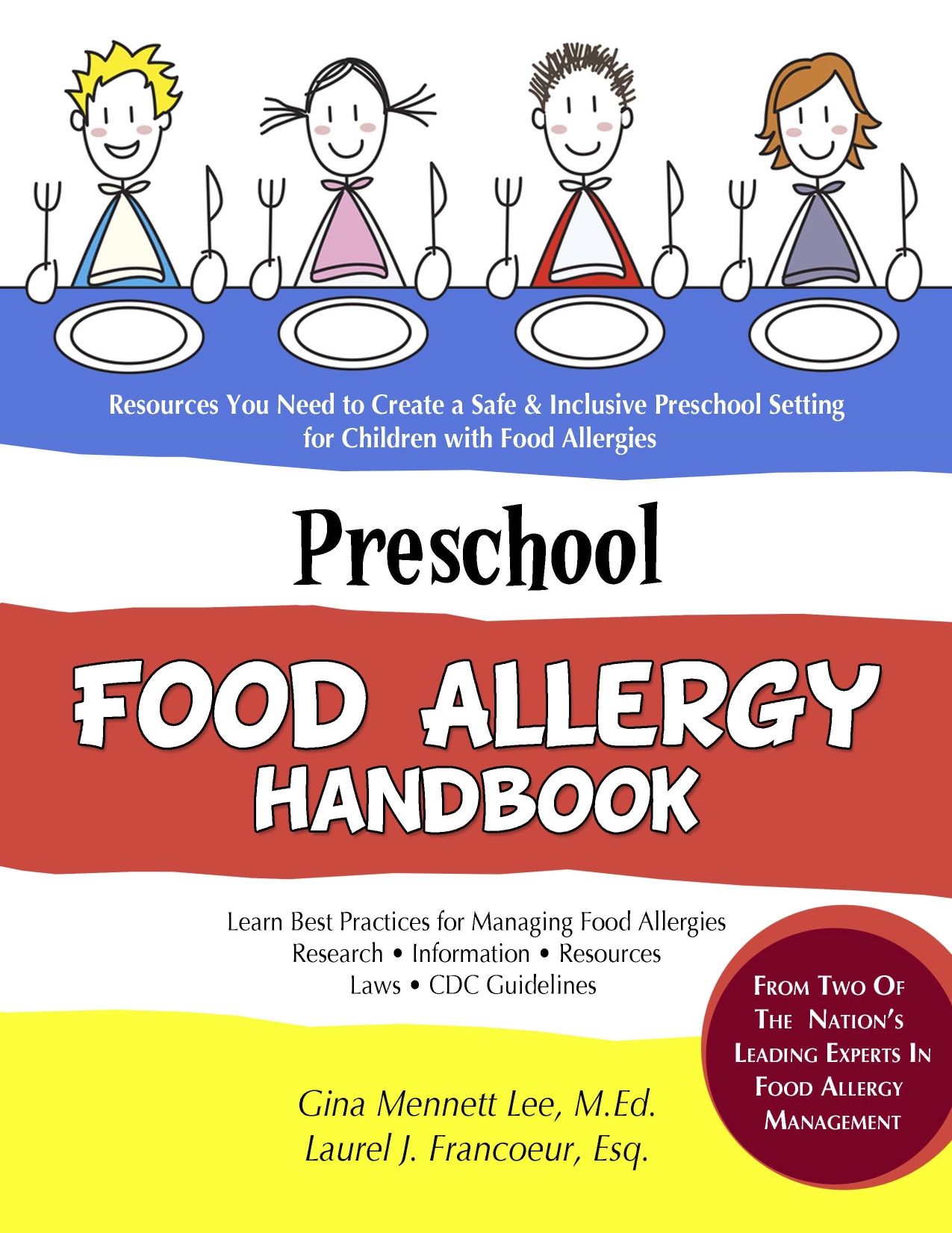
BUY YOUR COPY TODAY!

"One Stop Food Allergy Book Has It All!" -GratefulFoodie

Subscribe to Blog via Email

Keep up-to-date on the latest news, research and resources in the world of food allergies by subscribing to my blog.

Disclaimer

The information provided on this website is not intended to be used as medical or legal advice, nor is it intended to diagnose health problems, to act as a substitute for a doctor, or to act as a substitute for a lawyer. Nothing on this website can replace the independent judgment of a licensed physician or lawyer. If you, or a member of your family, has or is suspected to have a medical condition, please consult your health care provider. This website is provided on an "as is" basis without warranties of any kind, express or implied, including those of title, merchantability, fitness for a particular purpose. The user assumes all responsibility and risk for the use of this website.