Archive for the In the News Category

Is Device Design To Blame for Incorrect Epi Adminstration?

Tuesday, April 21st, 2015 | Permalink


This past February I was honored to be a speaker at a training session for support group leaders in London.   I learned  a great deal about the commonalities as well as the differences in the ways we approach food allergy management.  While in the UK, I met some amazing “mums” as well as wonderful professionals working in the field of food allergy.  One such professional was Dr. Robert Boyle, a well-known and highly respected pediatric allergist.  Of course, I took the opportunity to pick his brain about some of the concerns we see here in the Untied States.  One such discussion was the effective use of epinephrine auto-injectors by patients.  He let me in on some exciting research he was a part of regarding this very subject.   He shared the results with me but I was unable to share them with you until his paper was published.  Well, the paper has been published and I think the results could impact the choice of auto-injectors prescribed by doctors as well as the future design of epinephrine auto-injectors.

THE STUDY

In this study, patients were trained to use a specific device (Epipen or Anapen).  All patients were able to successfully use the device after initial training.

THEN

They tested the patients’ ability to use the device under simulated anaphylaxis at 6 weeks and at one-year.

NEXT

They switched the devices and did NOT give training with the new device.  (This is a real life scenario that we see here in the USA when insurance companies fail to cover a specific device.)

The purpose of the study was to find if device design (rather than just training) impacted the patients ability to correctly use the auto-injectors.

THE RESULTS

“we have shown… that successful adrenaline administration rates using Anapen and EpiPen are low during simulated anaphylaxis, and EpiPen use under stressful conditions carries a significant risk of digital injection.”
Success rates at the 6-week and one-year intervals were similar, hovering just below 45% for both devices used (Anapen and Epipen).  Meaning that less than half of the participants were able to correctly use the devices at both the 6 week and one year mark, even given successful initial training.
The low success rate is consistent with another study done in the United States that indicated that patients need more training.  However, in this study, the authors conclude that training may not be the only factor but rather device design may be greatly impacting the patients’ ability to correctly use the auto-injectors.
Here is the most significant piece of information for me:
“Over 90% of participants were able to successfully administer adrenaline using Auvi-Q without receiving device-specific training…”
IMG_2214
The success rate for Auvi-Q was an astounding 90%  WITHOUT training!   Success rates for other devices without device-specific training were only  49%.   Hopefully, it goes without saying, that training is very important, but this study has me pondering the role of device design as well.

Of course, this is but one study and I would love to see additional studies.  However, I believe this information is important to share and has an impact on many of the discussions we are having here in the United States regarding use of stock epinephrine in restaurants, schools and other locations.  Could Auvi-Q be a better option in these circumstances?


The authors believe this is worth discussing.

“the high rate of successful adrenaline administration which we found when participants used the audio-prompt device Auvi-Q, in a stressful anaphylaxis scenario and without prior device-specific training, suggests that Auvi-Q is an important advance in AAI device design and may even be suitable for bystander use in public areas such as schools”


Also of interest, were the ways in which people incorrectly used the epinephrine auto-injectors.  The authors hope this information will help aid in device design.

The most common reasons for failing to use the auto-injector correctly were:

  • Failure to remove safety cap
  • Using wrong end of device
  • Not holding device in place long enough

I encourage you to read this study for yourself.

Does this information change the way you manage food allergies?  Please comment below.


A special thank you to Dr. Robert Boyle for sharing this important study.

References:
Patients’ ability to treat anaphylaxis using adrenaline autoinjectors: a randomized controlled trial.
Umasunthar T, Procktor A, Hodes M, Smith JG, Gore C, Cox HE, Marrs T, Hanna H, Phillips K , Pinto C, Turner PJ, Warner JO, Boyle RJ.
Allergy 2015; DOI: 10.1111/all.12628.
Misuse of medical devices: a persistent problem in self-management of asthma and allergic disease
Bonds, Rana S. et al.
Annals of Allergy, Asthma & Immunology , Volume 114 , Issue 1 , 74 – 76.e2

Related Posts:

Do You Know Your Epi?

Do You Know Your EPI?

Sunday, March 1st, 2015 | Permalink

By Gina Mennett Lee, M.Ed.   FoodAllergyConsulting.com

As part of our Beyond Awareness Food Allergy Educational Campaign for 2015, this month we are focusing on knowing how to use your epinephrine auto-injector.  This month’s campaign is hosted by friend and fellow food allergy advocate, Sharon Wong of NutFreeWok.  Her blog post is an excellent read and thoroughly explains our campaign.  Below I’ve provided my thoughts and a quick overview.

Screen shot 2015-03-01 at 4.09.18 PM

Why focus on epinephrine training?

A recent study from the University of Texas Medical Branch at Galveston found that out of 102 patients ONLY 16% used their epinephrine auto-injector correctly.

Screen shot 2015-03-01 at 5.22.48 PM


The most frightening statement was made by Rana Bonds, MD, ACAAI Fellow and lead author of the study.

“Most patients made multiple mistakes and would not have benefited from self-administration of the potentially life-saving treatment if the need arose.”

What can you do?

  • Be sure that you know how to use the epinephrine prescribed to you or your loved one.
  • Use an epi trainer regularly to make sure you remember.  (Experts recommend at least every 3 months.)
  • Ask your loved one with food allergies where they keep their epi and if they know how to use it.

Please help us to spread this important message by tweeting, sharing or blogging about this topic. Please tag it with #FAEC15 and feel free to share a link to your blog post here.

Links to instructional videos can be found below:

EpiPen
Auvi-Q
Adrenaclick
Epinephrine Autoinject

The “Beyond Awareness Educational Campaign” was created by Gina Mennett Lee, M.Ed. of Mennett Lee, LLC.  The purpose of the campaign is to harness social media to provide necessary education to the public regarding food allergy management.  Caroline Moassessi  of GratefulFoodie and Sharon Wong of Nut Free Wok have joined the campaign to provide an even greater reach.  We hope you will join our effort by sharing the campaigns on your social media outlets. Together we can make a difference.

LEAP Study is “Belle of the Ball” at AAAAI Conference

Friday, February 27th, 2015 | Permalink

By Gina Mennett Lee, M.Ed.

FoodAllergyConsulting.com


“What are you doing?”  My husband asked incredulously.   My eyes had been glued to my phone intermittently for hours over the weekend.
“Following the AAAAI Conference.”

“What is that?”

“The American Academy of Asthma Allergy and Immunology Annual Conference.  I follow it every year to stay up to speed in the latest research.  Docs from the conference are tweeting the most recent research and findings.”

As I snuggled into my home, fire blazing in our fireplace, snow falling outside for the umpteenth time this winter, some of the allergy field’s greatest medical minds were gathered to share information, debate current thoughts, and hob-knob.

Twitter is the closest I can be to a fly on the wall at the conference.  It allows me access to the thoughts and notes of some of these doctors (some that I have pleasure of knowing) as they are listening to the speakers share their research and findings.  Even better, it gives me a chance to ask questions.

I read, “favorite” and retweet furiously so I can refer back later and track down the research to read.  Of course, I am partial to information related food allergies and anything relating to the school setting.  I was also interested to see lots of discussion on more effective ways to treat asthma patients.   I loved reading the tweets about the debate over whether or not OIT (Oral Immunotherapy) is ready for “primetime”.  (Seems like the consensus was “not quite yet”.)

But, by far, the belle of the ball this year was the LEAP study.

The Learning Early About Peanut Study debuted as this year’s conference and the food allergy world was literally abuzz.  Unfortunately, as this landmark study was released, so were a slew of misrepresentations on the actual implications of the study.  Many people wrongly were proclaiming a cure and recommending people expose children with peanut allergies to peanuts.

Unfortunately, this study does NOT apply to the 15 million patients in the USA that already have food allergy.

It is, however, very promising as it indicates a potential to PREVENT peanut allergy in high risk infants. Further studies are being done to see if it applies to other allergens and what the long-term outcomes are for the patients in the study.

Below is a short video describing the thought behind the creation of this study.

Screen shot 2015-02-27 at 12.06.12 PM


For more information on the LEAP study, I invite you to read it as well as this excellent synopsis of it by Dr. David Stukus on the AsthmaAllergiesChildren.com website.

To see more of what I found interesting, you can read my twitter feed.  Below are just a few examples.

Disclaimer:  Tweets are but a snippet of the information.    It is very important to find and read the research that interests you rather than relying on a tweet (or even a news article) to fully convey the information.


Screen shot 2015-02-22 at 7.32.44 PMScreen shot 2015-02-22 at 7.35.31 PM Screen shot 2015-02-22 at 7.42.06 PMScreen shot 2015-02-27 at 12.13.00 PMScreen shot 2015-02-27 at 12.35.41 PM

I am very thankful to all the doctors and other professionals that took the time to tweet at the AAAAI Conference as well as the dedicated research teams and patients involved in these studies.  I hope all this excitement inspires you read some of the research and to follow along with me next year.


#WhereIsYourEpi Campaign Updates

Thursday, January 29th, 2015 | Permalink

By Gina Mennett Lee, M.Ed.

Screen shot 2015-01-28 at 1.27.46 PM

I am a firm believer that when we work together towards common goals, great things can be achieved.  There is much work to be done in the food allergy community and it is going to take the hands and hearts of many to accomplish it.

In keeping with the theme of working together, I have two exciting updates to share with you:

1. News From KFA

Kids With Food Allergies will be hosting a year-long campaign named “WhereInTheWorldIsMyEpi”.  The purpose of this campaign is the same as my #WhereIsYourEpi? campaign: to encourage those with food allergies to always have immediate access to their epinephrine auto-injectors.  Lynda Mitchell, KFA Founder and Senior Director, called me earlier this week to share her campaign and to let me know that it had been in the works for months. Lynda Mitchell stated, “For those of us active in the food allergy community, we see the same concerns and gaps in education and awareness. This means that occasionally we’re going to find out we’re both trying to tackle the same issue at the same time.

I think this is great news and I could not be more pleased that a wonderful organization like KFA will be devoting an entire year to this important educational campaign.  To learn more about it, visit KFA’s website.

2. GratefulFoodie and NutFreeWok  Join My “Beyond Awareness” Campaigns for 2015

Speaking of working together, I am honored to have Caroline Moassessi and Sharon Wong partner with me for the rest of the 2015 “Beyond Awareness” educational campaigns.  We will be announcing a new campaign each month.  Stay tuned to learn how you can become involved too!  Feel free to contact me with any questions or leave a comment below!

Reminder: The #WhereIsYourEPI? campaign ends February 14th, so you still have 2 more weeks to get your submissions in.  One winner will be chosen at random and will receive a $50 Amazon Gift Card.  Be sure to share your photos here on my website, or on twitter (it must be tagged #WhereIsYourEPI to qualify.   Thanks so much for participating!


Advocacy Toolkit

Monday, January 5th, 2015 | Permalink


Screen shot 2015-01-05 at 1.52.47 PMI am so excited to share this excellent resource from the Asthma & Allergy Foundation of America.  This is a topic that is near and dear to my heart as a food allergy consultant.  At the Food Allergy Bloggers Conference last September, I was honored to speak about advocacy with Caroline Moassessi, Laurel Francoeur, and Jan Hansen.  So I was thrilled when I heard that Caroline helped to create this resource for AAFA.  Her knowledge and experience are on full display in this toolkit.  This toolkit includes information on how to effectively communicate your message, the legislative process, using social media for advocacy, and much more.  It is a must read for any advocate.  Download it, read it and share it!


A Food Allergy Mission for 2015: Moving Beyond Awareness to Education

Thursday, January 1st, 2015 | Permalink

Screen shot 2014-12-31 at 8.10.02 PM

As 2014 comes to a close, it is a natural time for reflection.  In addition to making resolutions in my personal life, I have been thinking about our food allergy community and all that has happened this year.   There were high highs like Sean Parker donating $24 million to the cause, and the new and exciting research regarding food allergy therapies.   But there were also some very low lows.  The ignorance on display in Clawson immediately comes to mind.   The lows that tend to impact me most are the stories of food allergy deaths and the many calls and emails I receive from parents worried about exclusion and safety issues at school.  Most of these lows seem to have one common denominator: education.

When I first entered the world of food allergies, about a decade ago, there was little awareness of food allergies.  People had “heard” of peanut allergies but not much else.  It was important to bring awareness to the facts that: one, people can be allergic to any food;  and two, food allergies can be life-threatening.  But in the years since, I’ve seen a much greater need to move beyond awareness and to focus more of our efforts on effective and meaningful education.  Misinformation can be more dangerous than no information at all, and this is especially true for food allergy.

Misinformation can be more dangerous than no information at all, and this is especially true for food allergy.

So in the spirit of making resolutions for the New Year, I hope we can all resolve to work together to make EDUCATION the mission for 2015.

Here are What I View as the Top 5 Educational Priorities:

  1. The importance of food allergic individuals having epinephrine immediately available at all times
  2. How and when to use epinephrine
    • Effective epinephrine auto-injector training,
    • Emphasis on epinephrine as the first-line treatment for anaphylaxis
    • How to identify symptoms of anaphylaxis
  3. How to effectively implement the CDC Guidelines in every school, preschool, and daycare
  4. How food allergies impact individuals, families and communities
  5. How to include those with food allergies in their community


Additional Educational Priorities:

  • Food allergy testing and what it really means
  • How to effectively advocate for your child
  • How to effectively educate those around you
  • The concept of cross-contact (what it is and how to avoid it)
  • Methods of exposure to allergens
  • Labeling laws and their limitations

 In the coming months, I will do my best to advance the goal of education.  If all of us, in the food allergy community (doctors, nurses, non-profits, support group leaders, food allergy educators/consultants/coaches, parents, etc…) could focus on education with consistent messaging from vetted sources, I know we could make a true and lasting impact.  

Will you join me?  What do you see as a priority for 2015?  Is there anything you add to this list?


Nothing This Important Has Ever Been Easy

Tuesday, December 23rd, 2014 | Permalink

Yesterday, I wrote a short note to the parents in a facebook group I created specifically to address food allergies at school.  Every day there are posts that parents share about their child’s struggles to be safely included at school.  Along with the support and advice given, there is a great deal of anger, heartache and frustration.  There is so much education that needs to be done in our medical facilities, our schools and our communities that often we can’t see our progress.

We are in the middle of a great a paradigm shift.  As change-makers it can be a difficult road, but nothing this important has ever been easy.  My dear friend, Caroline Moassessi asked that post my letter on my blog.  So, here it is along with the quote I posted to accompany it.

Screen shot 2014-12-22 at 10.56.01 AM


Dear Friends:
I know that there is a lot of frustration out there due to issues at school. As a former teacher, I find it especially upsetting when I hear of these struggles. But I want you to know that we are making huge strides. I work with schools and parents from across the country and I do see a major shift from even a couple of years ago. Those shifts have to do with parents like you taking the time to build positive relationships with schools and other parents and helping to educate them. It takes time to advocate and the effectiveness of that advocacy has everything to do with our behavior, tone and message.
When you are in the middle of the change it can be difficult to see the end, but I know that with polite and firm persistence, these issues will become a thing of the past. I know because I have seen it work time and time again. Know what your personal goals are. Make sure you are taking advice from people that have been effective at advocating. Ask them if their strategies have actually worked before and what the outcome was. I know that some day we will look back on all of this and be proud to say that we were a part change that helped save lives.
Love to you all!


There is a even bigger message here and one that we all need to listen to, parents, doctors, nurses, teachers, and school administrators alike.  We need each other. We are partners in this process.  Parents need to understand the demands placed on teachers and administrators, the way that schools function and the needs of other students.  Administrators and teachers can learn a great deal from listening to parents that have the experience of managing food allergies every day, all day.  This is a complicated health issue and we need to work together to manage it effectively.

When we take a moment to view an issue or challenge through one another’s eyes, that moment is never wasted.  It doesn’t mean that you will have the same perspective as the other person but it might help build bridges of understanding. It might even allow you to find some common ground and create solutions that work for everyone.


CYBER MONDAY SPECIAL

Monday, December 1st, 2014 | Permalink

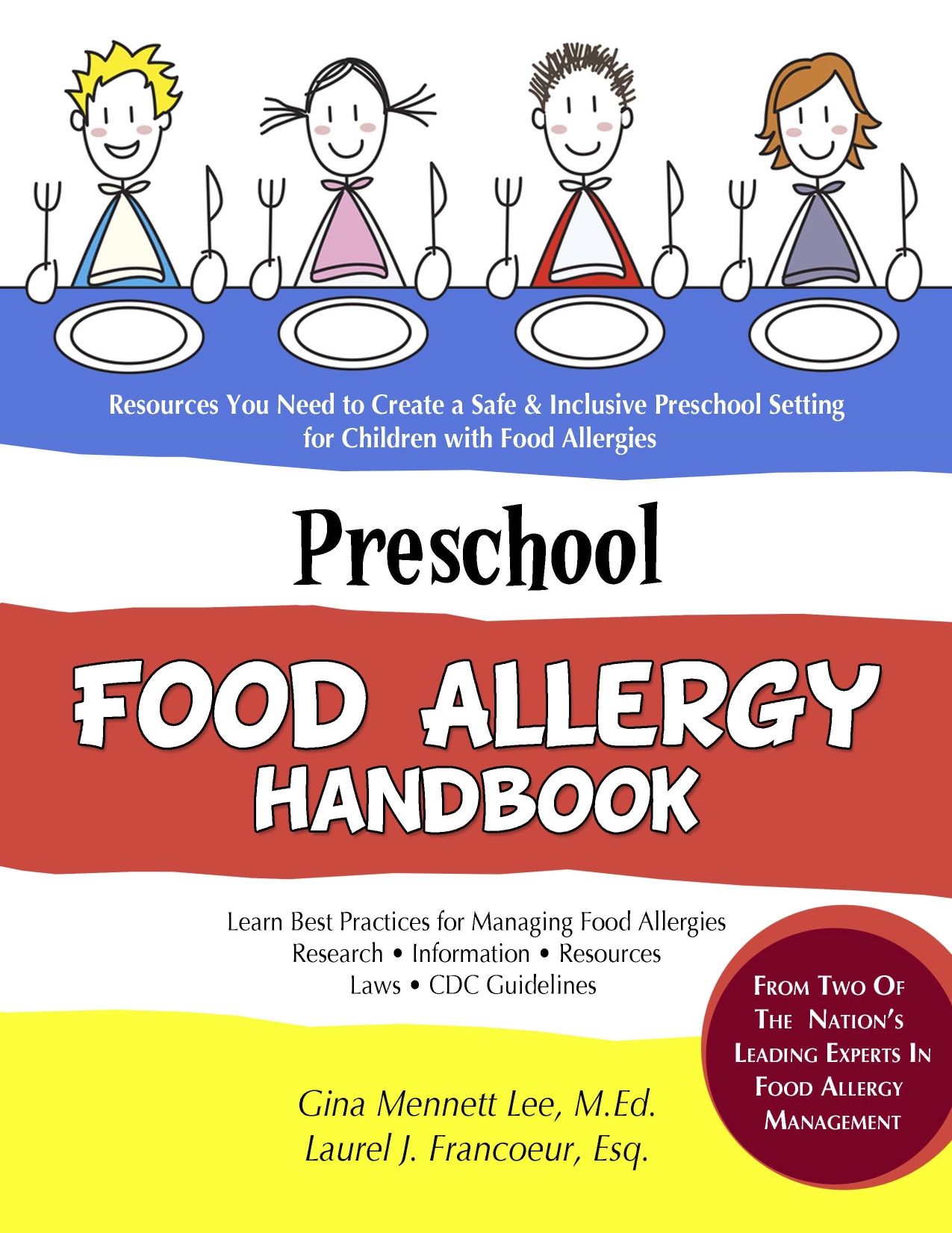
The Preschool Food Allergy Handbook plus FREE Poster!

ONLY $25 and only at LaurelLeeAcademy.com

Allergy Cover


There is a Responsibility that Comes with Having a Voice

Tuesday, November 25th, 2014 | Permalink

By Gina Mennett Lee, M.Ed.

FoodAllergyConsulting.com

22thereisaresponsibility0athatcomeswithhavinga0avoice220a-default

I have been asked to speak about the topic of being thoughtful about our words and actions when communicating in public many times over the past few months.  I usually use this quote during the presentations and I think it is worth sharing in light of what took place at a Clawson, Michigan Board of Education meeting.  After making an inappropriate remark that spawned a flurry of responses from the food allergy community, the woman who made the remark resigned from her position.  (to read more, click HERE)

Was her resignation an appropriate response?

In my opinion it is the least that she could do. (I’d also like to see a public apology from her and an effort for her to become educated about food allergies and their management. Her statements were hurtful to the food allergy community and also no doubt to those impacted by school shootings. )  No doubt, all of us have said things we wished we hadn’t and I am sure this woman regrets her statement.  However, as I stated in a previous post, we must hold our elected officials to a high standard of behavior.  When given a public position, your voice represents more than just yourself or your family.  You represent the community you serve and become role model.  It is a huge responsibility and one that should not be entered into lightly.

When someone in the public eye makes such a hurtful and insensitive comment in a public forum (in a televised/recorded meeting no less), it is imperative that action be taken that is in alignment with the morals and values of that community.  It important to those that were hurt by the comment to see that action has been taken and it is important to our children that we practice what we practice what we preach and we set a positive example.  As members of the community holding people accountable is the very least that we can do and is our responsibility as a society.

What do you think?


Children with Food Allergies Should Be Shot?

Tuesday, November 25th, 2014 | Permalink

A child’s safety is not a joke.

I usually don’t waste my time responding to inappropriate comments made by ignorant people regarding food allergies. I’d rather spend my time educating others and working for positive change.  However, this remark just could not and should not be ignored. It was made by a member of a board of education in Clawson, Michigan.  I only viewed the short clip shown here. In the clip, it sounds as though a faculty member is asking the board to address food allergy management citing that there is at least one child in every classroom now.  In response to this, a BOE member, identified on the site as Linda Grossman, states, “Well you should just shoot them.”  Laughter is heard after the remark from several people.

To view for yourself, see this link.

This is an unacceptable “joke” in age where school shootings are real threats and bullying of food allergic children is at a whopping 45%.  I often speak about the impact of our words and actions as adults.  It is unacceptable for any person to suggest such a horrific deed, but  I hold our public officials to an even higher standard.  Board of Education members are tasked with overseeing the health, safety and education of the children in their care. This type of comment is in direct conflict with that responsibility.  It is ignorant at best and careless, heartless and downright dangerous at it’s worst.

I sincerely hope that this school district takes the appropriate action here and sends a strong message to their community that joking about “shooting” children is NEVER acceptable and ALL children are deserving of a safe and healthy environment in which to learn.

Please feel free to post your thoughts on this issue.

BUY YOUR COPY TODAY!

"One Stop Food Allergy Book Has It All!" -GratefulFoodie

Subscribe to Blog via Email

Keep up-to-date on the latest news, research and resources in the world of food allergies by subscribing to my blog.

Disclaimer

The information provided on this website is not intended to be used as medical or legal advice, nor is it intended to diagnose health problems, to act as a substitute for a doctor, or to act as a substitute for a lawyer. Nothing on this website can replace the independent judgment of a licensed physician or lawyer. If you, or a member of your family, has or is suspected to have a medical condition, please consult your health care provider. This website is provided on an "as is" basis without warranties of any kind, express or implied, including those of title, merchantability, fitness for a particular purpose. The user assumes all responsibility and risk for the use of this website.